Pages

Showing posts with label stolen art. Show all posts

Will the ashes in a stove in Romania prove to be the remains of the seven paintings stolen from the Triton Foundation exhibit at the Kunsthal Rotterdam?

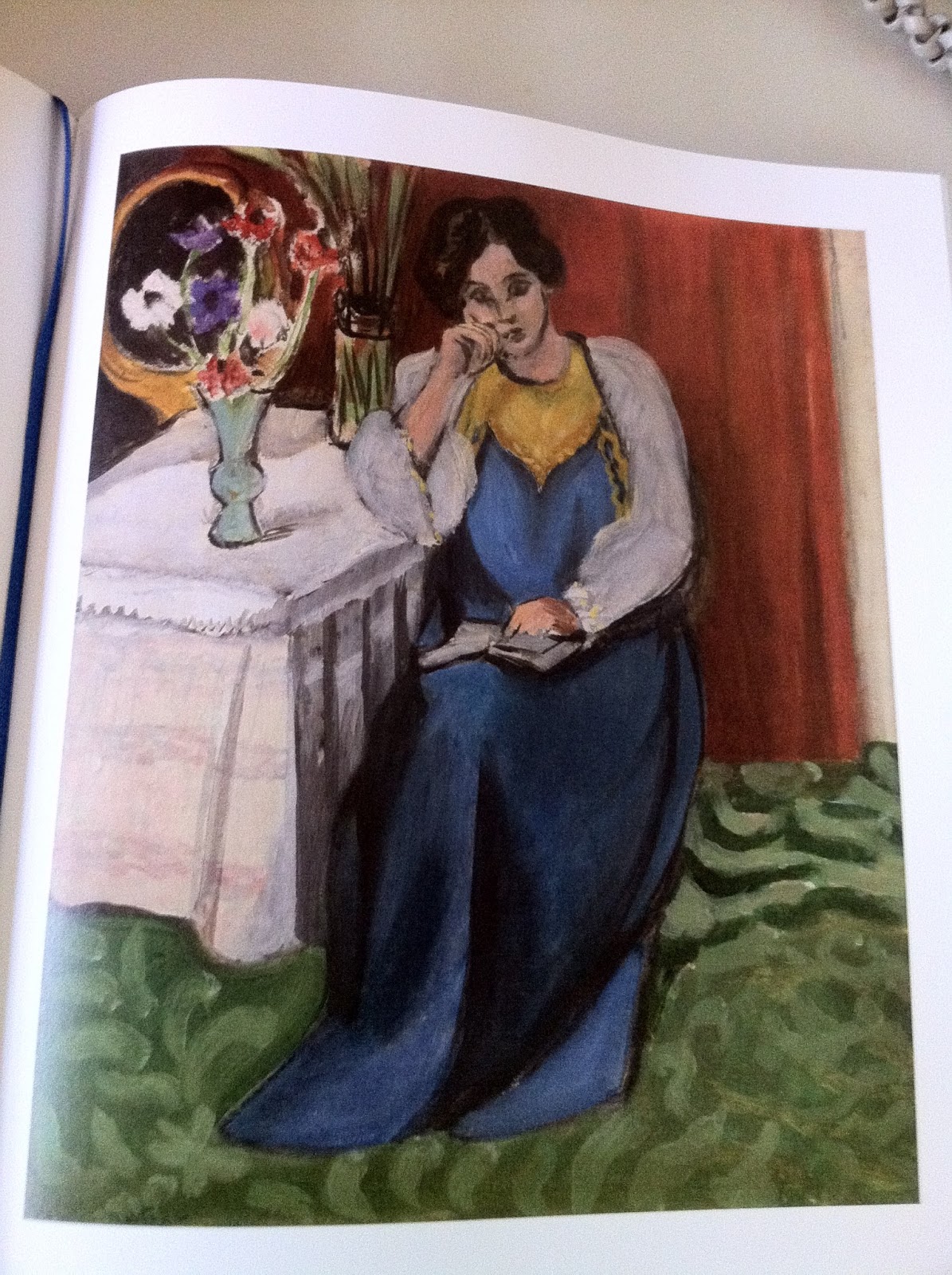
Photograph of the image of the Matisse
painting from the Triton Foundation
 stolen from the Kunsthal Rotterdam
 on October 16, 2012.
by Catherine Schofield Sezgin, ARCA blog Editor 

The prosecutor's office in Romania suspects the seven Triton Foundation paintings stolen from the Kunsthal Rotterdam last October 16 may have been destroyed, Agency France-Presse reported May 29. Art Hostage blogger blames this rumor on the failure to offer a reward for the return of this and other stolen art. Two years ago, reports surfaced that the paintings stolen from the Museé d'Art Moderne de la ville de Paris had been thrown in the trash.

According to AFP, investigators are examining ashes taken from the home of the mother of one of the suspects Kunsthal Rotterdam thieves to determine if they include remains of the stolen paintings, including works by Picasso, Monet and Matisse. Seven Romanians have reportedly been charged with the theft. Destruction of the paintings would eliminate evidence in the even the stolen works could not be sold or ransomed back to the art gallery in The Netherlands.

The Dutch website NU.NL quotes the lawyer for one of the suspects as denying that the ashes are any proof that the paintings were destroyed.

Here is a link to previous posts on the ARCA blog covering the Kunsthal Rotterdam theft, including information about the stolen paintings.

On the blog Art Hostage, Paul "Turbo" Hendry, a self-described former stolen art trafficker, blames destruction of stolen paintings on the lack of financial incentives to recovering or returning stolen art.
Photograph of the image of the Matisse
painting from the Triton Foundation
 stolen from the Kunsthal Rotterdam
 on October 16, 2012.
by Catherine Schofield Sezgin, ARCA blog Editor 

The prosecutor's office in Romania suspects the seven Triton Foundation paintings stolen from the Kunsthal Rotterdam last October 16 may have been destroyed, Agency France-Presse reported May 29. Art Hostage blogger blames this rumor on the failure to offer a reward for the return of this and other stolen art. Two years ago, reports surfaced that the paintings stolen from the Museé d'Art Moderne de la ville de Paris had been thrown in the trash.

According to AFP, investigators are examining ashes taken from the home of the mother of one of the suspects Kunsthal Rotterdam thieves to determine if they include remains of the stolen paintings, including works by Picasso, Monet and Matisse. Seven Romanians have reportedly been charged with the theft. Destruction of the paintings would eliminate evidence in the even the stolen works could not be sold or ransomed back to the art gallery in The Netherlands.

The Dutch website NU.NL quotes the lawyer for one of the suspects as denying that the ashes are any proof that the paintings were destroyed.

Here is a link to previous posts on the ARCA blog covering the Kunsthal Rotterdam theft, including information about the stolen paintings.

On the blog Art Hostage, Paul "Turbo" Hendry, a self-described former stolen art trafficker, blames destruction of stolen paintings on the lack of financial incentives to recovering or returning stolen art.
reade more... Résuméabuiyad

Dan Brown's fictional Robert Langdon uses the "ARCA Web site" in "Inferno" to research the Horses of St. Mark's in Venice

The Horses of St. Mark's (The Triamphal Quadriga)
by Catherine Schofield Sezgin,
ARCA Blog Editor-in-Chief

In Chapter 17 of Dan Brown's Inferno published May 14 by Doubleday, (and reviewed by Janet Maslin in The New York Times), the fourth book featuring Robert Langdon, the fictional Harvard University professor of religious iconography and symbology, researches the Horses of St. Mark's: 

As it turned out, the powerful bodies of the early Friesian horses had inspired the robust aesthetic of the Horses of St. Mark’s in Venice. According to the Web site, the Horses of St. Mark’s were so beautiful that they had become “history’s most frequently stolen pieces of art.”

Langdon had always believed that this dubious honor belonged to the Ghent Altarpiece and paid a quick visit to the ARCA Web site to confirm his theory. The Association for Research into Crimes Against Art offered no definitive ranking, but they did offer a concise history of the sculptures’ troubled life as a target of pillage and plunder.

This appears to be a reference to the blog post(s) by Judge ArthurTompkins, an ARCA Lecturer, written in June of 2011: The Four Horses of the Basilica San Marco, Venice (Part I); More on the History (Part II); Continued Short History (Part III); and The Four Horses Rest Inside St. Mark's Basilica in Venice After Being Plundered from Constantinople in the 13th Century (Part IV). On the ARCA blog is another post about the "The Triamphal Quadriga" in Paris Diary: Replica of Stolen Art at Arc de Triomphe du Carrousel.

Then Brown is a bit more definitive about what academics would question:

The four copper horses had been cast in the fourth century by an unknown Greek sculptor on the island of Chios, where they remained until Theodosius II whisked them off to Constantinople for display at the Hippodrome. Then, using the Fourth Crusade, when Venetian forces sacked Constantinople, the ruling doge demanded the four precious statues be transported via ship all the way back to Venice, a nearly impossible feat because of their size and weight. The horses arrived in Venice in 1254, and were installed in front of the façade of St. Mark’s Cathedral.

More than half a millennium later, in 1797, Napoleon conquered Venice and took the horses for himself. They were transported to Paris and prominently displayed atop the Arc de Triomphe. Finally, in 1815, following Napoleon’s defeat at Waterloo and his exile, the horses were winched down from the Arc de Triomphe and shipped on a barge back to Venice, where they were reinstalled on the front balcony of St. Mark’s Basilica.

Although Langdon had been fairly familiar with the history of the horses, the ARCA site contained a passage that startled him.

The decorative collars were added to the horses’ necks in 1204 by the Venetians to conceal where the heads had been severed to facilitated their transportation by ship from Constantinople to Venice.
The Horses of St. Mark's (The Triamphal Quadriga)
by Catherine Schofield Sezgin,
ARCA Blog Editor-in-Chief

In Chapter 17 of Dan Brown's Inferno published May 14 by Doubleday, (and reviewed by Janet Maslin in The New York Times), the fourth book featuring Robert Langdon, the fictional Harvard University professor of religious iconography and symbology, researches the Horses of St. Mark's: 

As it turned out, the powerful bodies of the early Friesian horses had inspired the robust aesthetic of the Horses of St. Mark’s in Venice. According to the Web site, the Horses of St. Mark’s were so beautiful that they had become “history’s most frequently stolen pieces of art.”

Langdon had always believed that this dubious honor belonged to the Ghent Altarpiece and paid a quick visit to the ARCA Web site to confirm his theory. The Association for Research into Crimes Against Art offered no definitive ranking, but they did offer a concise history of the sculptures’ troubled life as a target of pillage and plunder.

This appears to be a reference to the blog post(s) by Judge ArthurTompkins, an ARCA Lecturer, written in June of 2011: The Four Horses of the Basilica San Marco, Venice (Part I); More on the History (Part II); Continued Short History (Part III); and The Four Horses Rest Inside St. Mark's Basilica in Venice After Being Plundered from Constantinople in the 13th Century (Part IV). On the ARCA blog is another post about the "The Triamphal Quadriga" in Paris Diary: Replica of Stolen Art at Arc de Triomphe du Carrousel.

Then Brown is a bit more definitive about what academics would question:

The four copper horses had been cast in the fourth century by an unknown Greek sculptor on the island of Chios, where they remained until Theodosius II whisked them off to Constantinople for display at the Hippodrome. Then, using the Fourth Crusade, when Venetian forces sacked Constantinople, the ruling doge demanded the four precious statues be transported via ship all the way back to Venice, a nearly impossible feat because of their size and weight. The horses arrived in Venice in 1254, and were installed in front of the façade of St. Mark’s Cathedral.

More than half a millennium later, in 1797, Napoleon conquered Venice and took the horses for himself. They were transported to Paris and prominently displayed atop the Arc de Triomphe. Finally, in 1815, following Napoleon’s defeat at Waterloo and his exile, the horses were winched down from the Arc de Triomphe and shipped on a barge back to Venice, where they were reinstalled on the front balcony of St. Mark’s Basilica.

Although Langdon had been fairly familiar with the history of the horses, the ARCA site contained a passage that startled him.

The decorative collars were added to the horses’ necks in 1204 by the Venetians to conceal where the heads had been severed to facilitated their transportation by ship from Constantinople to Venice.
reade more... Résuméabuiyad

The Missing Piece: Mona Lisa, Her thief, The True Story Headed to Denver Art Museum this Friday and to the Biografilm Festival in Bologna in June

The Missing Piece: Mona Lisa, Her Thief, The True Story, the documentary about the 1911 theft of Leonardo da Vinci's now famous portrait of Lisa Gherardini del Giocondo from the Louvre, premiered in Los Angeles at the Beverly Hills Film Festival on Saturday, May 11.

"We were thrilled to have The Missing Piece screen at Grauman's Chinese Theater for the Beverly Hills Film Festival," Director Joe Medeiros wrote to the ARCA Blog. "We had a very enthusiastic sold-out crowd.  It was our 9th festival and one of the best so far."

Medeiros bills the film as "the true story of how and why Vincenzo Peruggia, a simple Italian immigrant, stole the Mona Lisa and nearly got away with it".

The film will screen at the Denver Art Museum at 7 p.m. this Friday (May 17):
Come to a riveting and humorous documentary film about Vincent Peruggia, the man who stole the Mona Lisa from the Louvre in 1911, his 84-year-old daughter who thought he did it for patriotic reasons, and the filmmaker who spent more than 30 years trying to find the truth.  Written and produced by Joe Medeiros, former head writer for The Tonight Show with Jay Leno, this documentary combines historical photographs, animation and interviews with Peruggia’s descendants to examine how an unassuming housepainter from Italy pulled off “the greatest little-known heist in modern time.”  The producers will be present for Q&A after the film.
The international premiere of the movie will be at the Biografilm Festival in Bologna on Saturday June 15 and Sunday June 16.

Joe Medeiros, writer/director, and
Justine Medeiros, producer. 
ARCA Alum ('11) Tanya Lervik saw the movie last July in Georgetown and reviewed the movie here.

Last October Joe Medeiros weighed in on the Isleworth Mona Lisa, positioning that the painting had not been newly discovered but around for almost a century (see the ARCA blog post here).

This documentary is available for private screenings. Here are the project's links:

Twitter@monalisastolen

Updated May 15 to include information from the director Joe Medeiros.
The Missing Piece: Mona Lisa, Her Thief, The True Story, the documentary about the 1911 theft of Leonardo da Vinci's now famous portrait of Lisa Gherardini del Giocondo from the Louvre, premiered in Los Angeles at the Beverly Hills Film Festival on Saturday, May 11.

"We were thrilled to have The Missing Piece screen at Grauman's Chinese Theater for the Beverly Hills Film Festival," Director Joe Medeiros wrote to the ARCA Blog. "We had a very enthusiastic sold-out crowd.  It was our 9th festival and one of the best so far."

Medeiros bills the film as "the true story of how and why Vincenzo Peruggia, a simple Italian immigrant, stole the Mona Lisa and nearly got away with it".

The film will screen at the Denver Art Museum at 7 p.m. this Friday (May 17):
Come to a riveting and humorous documentary film about Vincent Peruggia, the man who stole the Mona Lisa from the Louvre in 1911, his 84-year-old daughter who thought he did it for patriotic reasons, and the filmmaker who spent more than 30 years trying to find the truth.  Written and produced by Joe Medeiros, former head writer for The Tonight Show with Jay Leno, this documentary combines historical photographs, animation and interviews with Peruggia’s descendants to examine how an unassuming housepainter from Italy pulled off “the greatest little-known heist in modern time.”  The producers will be present for Q&A after the film.
The international premiere of the movie will be at the Biografilm Festival in Bologna on Saturday June 15 and Sunday June 16.

Joe Medeiros, writer/director, and
Justine Medeiros, producer. 
ARCA Alum ('11) Tanya Lervik saw the movie last July in Georgetown and reviewed the movie here.

Last October Joe Medeiros weighed in on the Isleworth Mona Lisa, positioning that the painting had not been newly discovered but around for almost a century (see the ARCA blog post here).

This documentary is available for private screenings. Here are the project's links:

Twitter@monalisastolen

Updated May 15 to include information from the director Joe Medeiros.
reade more... Résuméabuiyad

Norway Celebrates 150 Anniversary of Munch's birth; BBC Broadcast Interviewed Charley Hill last February on the Successful Return of The Scream in 1994

Celebrating the 150 anniversary of the birth of Edvard Munch, the National Museum and Munch Museum in Norway will exhibit more than 200 of the artist's paintings in "Munch 150" on June 2.

Here's a link to a BBC World Service broadcast last heard in February near the anniversary of the 1994 theft of Edvard Munch's The Scream. Charley Hill, former undercover police officer for Scotland Yard's Art and Antiquities Squad (his boss was ARCA Instructor Dick Ellis), describes how he posed as Chris Roberts, a consultant with the Getty Museum to negotiate the purchase of the stolen painting. The broadcast concludes the show with the statement that three of the four convicted of the theft successfully appealed on the grounds that Mr. Hill entered Norway under a fake passport.

Here's a summary of the facts on the 1994 theft as reported by the BBC.

Theresa Veier, an art history and lawyer in Oslo, wrote for the ARCA Blog about the artist and the theft of his work more than 65 years after Edvard Munch's death.
Celebrating the 150 anniversary of the birth of Edvard Munch, the National Museum and Munch Museum in Norway will exhibit more than 200 of the artist's paintings in "Munch 150" on June 2.

Here's a link to a BBC World Service broadcast last heard in February near the anniversary of the 1994 theft of Edvard Munch's The Scream. Charley Hill, former undercover police officer for Scotland Yard's Art and Antiquities Squad (his boss was ARCA Instructor Dick Ellis), describes how he posed as Chris Roberts, a consultant with the Getty Museum to negotiate the purchase of the stolen painting. The broadcast concludes the show with the statement that three of the four convicted of the theft successfully appealed on the grounds that Mr. Hill entered Norway under a fake passport.

Here's a summary of the facts on the 1994 theft as reported by the BBC.

Theresa Veier, an art history and lawyer in Oslo, wrote for the ARCA Blog about the artist and the theft of his work more than 65 years after Edvard Munch's death.
reade more... Résuméabuiyad

Florida Sheriff Reviving Search for Religious Paintings Stolen from Museum of the Cross in 1968

A Sarasota County sheriff's detective in Florida, Detective Kim McGrath, is reviving the search for 15 religious paintings by Saturday Evening Post illustrator Ben Stahl which were stolen from his Museum of the Cross on April 16, 1968.


Associated Press' Tamara Lush reported on the new search for the paintings stolen more than four de cades ago (Florida's Herald Tribune, "Stolen Religious Art an Enduring Mystery").
Commissioned to illustrate a Bible for the Catholic Press in the mid-1950s, Stahl painted the 14 Stations of the Cross. Later, he decided to paint larger versions, along with a 15th painting, "The Resurrection," because he wanted his work to end on a positive note. All 15 paintings were 6 feet by 9 feet, and painted in oil. In 1965, Stahl and his wife moved to Sarasota and decided to open a museum for the large-scale paintings. Called "The Museum of the Cross," it was one of the main tourist attractions in the area at the time.


One witness remembered seeing a white van near the museum that night, while Stahl recalled two visitors from South America who asked odd questions in the days prior to the theft. The trail eventually went cold, and Stahl and his family didn't think investigators were trying as hard as they could.
"It was devastating," said Regina Briskey, Ben Stahl's daughter, who was working at the museum at the time. "It was incomprehensible, because at that time in Sarasota, there was hardly any crime."
The artist's son, David Stahl, wrote on a website that he even contacted witnesses and possible informers around Florida, but claimed authorities didn't pay attention.
Keeping an old art theft case open:
McGath -- who is also investigating the cold case of a quadruple murder in 1959 in Sarasota and its possible link to the "In Cold Blood" killers in Kansas -- said she is poring over records. She wants to talk to anyone who might have information about the Stahl art heist. 
Interpol Washington is also involved. Spokeswoman Nicole Navas said this week that officials recently sent out a message to all 190 Interpol member countries in an attempt to renew interest in the case, which she said is one of 500 open art heist cases being investigated by the agency.
A Sarasota County sheriff's detective in Florida, Detective Kim McGrath, is reviving the search for 15 religious paintings by Saturday Evening Post illustrator Ben Stahl which were stolen from his Museum of the Cross on April 16, 1968.


Associated Press' Tamara Lush reported on the new search for the paintings stolen more than four de cades ago (Florida's Herald Tribune, "Stolen Religious Art an Enduring Mystery").
Commissioned to illustrate a Bible for the Catholic Press in the mid-1950s, Stahl painted the 14 Stations of the Cross. Later, he decided to paint larger versions, along with a 15th painting, "The Resurrection," because he wanted his work to end on a positive note. All 15 paintings were 6 feet by 9 feet, and painted in oil. In 1965, Stahl and his wife moved to Sarasota and decided to open a museum for the large-scale paintings. Called "The Museum of the Cross," it was one of the main tourist attractions in the area at the time.


One witness remembered seeing a white van near the museum that night, while Stahl recalled two visitors from South America who asked odd questions in the days prior to the theft. The trail eventually went cold, and Stahl and his family didn't think investigators were trying as hard as they could.
"It was devastating," said Regina Briskey, Ben Stahl's daughter, who was working at the museum at the time. "It was incomprehensible, because at that time in Sarasota, there was hardly any crime."
The artist's son, David Stahl, wrote on a website that he even contacted witnesses and possible informers around Florida, but claimed authorities didn't pay attention.
Keeping an old art theft case open:
McGath -- who is also investigating the cold case of a quadruple murder in 1959 in Sarasota and its possible link to the "In Cold Blood" killers in Kansas -- said she is poring over records. She wants to talk to anyone who might have information about the Stahl art heist. 
Interpol Washington is also involved. Spokeswoman Nicole Navas said this week that officials recently sent out a message to all 190 Interpol member countries in an attempt to renew interest in the case, which she said is one of 500 open art heist cases being investigated by the agency.
reade more... Résuméabuiyad

Kunsthal Rotterdam Art Heist: Looking at the Paintings Stolen from the Triton Foundation (Provenance Information Added)

Lucian Freud, Woman with Eyes Closed
by Catherine Sezgin, ARCA Blog Editor

The seven paintings stolen from the Kunsthal Rotterdam on October 16 remain missing. On January 21, Romanian police arrested three men in connection with the gallery heist. March 4, Dutch police arrested a Romanian woman believed to be an accomplice. On March 13, a German man who arrested for blackmail after an alleged attempt to sell the Triton stolen paintings back to the foundation. The mother of one of the defendants arrested for the theft has claimed that she destroyed two of the paintings.

Last December Yale University published Avant-Gardes 1870 to the Present: The Collection of the Triton Foundation which offers more information on the stolen paintings stolen from the Triton Foundation. This catalogue is written by Sjraar van Heugten, former head of collections at the Van Gogh Museum, Amsterdam, and an independent art historian. Here the catalogue's information on the stolen paintings:

Lucian Freud: Woman with Eyes Closed (2002), oil on canvas, 30.5 x 25.4 cm. Provenance: Triton Foundation, acquired from the artists, 2002.


Paul Gauguin, La Fiancée 
Paul Gauguin, Woman Before a Window, 'The Fiancée, 1888, an oil on canvas. annotated in the lower right in red paint (damaged) La Fiancée; signed and dated lower right beneath annotation in black paint P Go 88, 33.8 x 41 cm. Provenance: Private collection, England; Kunsthandel (art dealer) Franz Buffa, Amsterdam; collection Allan and Nancy Miller, Solebury, Pennsylvania, 1949; auction Galerie Charpentier, Paris, 17 June 1960, no. 87 (unsold); auction Sotheby's, London, 4 July 1962, no. 75 (unsold); auction Christie's, Tokyo, 27 May 1969, no. 302; collection Samuel Josefowitz, Lausanne, circa 1981; auction Drouot-Montaigne, Paris, 3 April 1990, no. 58; Triton Foundation, 1997.


Matisse's Reading Woman
Matisse's Reading Woman in White and Yellow, 1919 was painted in the South of France in the suburb of Cimiez. The 31 x 33 cm work is "oil on canvas mounted on board" and "signed lower left Henri Matisse". Comment: Certificate of authenticity by Wanda de Guébriant, 12 Mar. 1996. Provenance: Galerie Bernheim-Jeune, Paris, acquired from the artists on 23 June 1919, no. 21624; Bernheim-Jeune Frères, acquired on 20 May 1931; collection Josse and Gaston Bernheim-Jeune, 1931; Bignou Gallery, New York; private collection, New York, 1947; collection Dr. Peter Nathan, Zurich, 1953; collection Emil G. Bührle, Zurich, acquired from the above on 8 December 1953; Foundation Emil G. Bührle Collection, since 1960; Triton Foundation, 1999.

Jacob Meyer De Haan, Self-Portrait

Jacob Meyer De Haan (Amsterdam 1852 - Amsterdam 1895), Self-Portrait against Japonist Background, circa 1889-1891, oil on canvas, 32.4 x 24.5 cm. Provenance: Collection Marie Henry, Le Pouldu; collection Ida Cochennec, daughter of the artists and Marie Henry; auction Cochennec Collection, Hôtel Drouot, Paris, 24 June 1959, no. 77; Marlborough Fine Art Ltd, London; collection Mr. and Mrs Arthur G. Altschul, New York, acquired in July 1961; Triton Foundation, 2002 (on long-term loan to the Van Gogh Museum, Amsterdam, 2002-2004).

Sideways view of Monet's Waterloo Bridge
Claude Monet: Waterloo Bridge, London (1901), pastel on brown laid paper, signed lower right Claude Monet, 30.5 x 48.0 cm. Provenance: Collection Werner Herold, Switzerland, circa 1917; private collection, USA, 1970; Triton Foundation, 1998.

Another sideway's view: Monet's
Charing Cross Bridge, London
Claude Monet's Charing Cross Bridge, London, 1901, pastel on brown gray laid paper, annotated and signed lower right à J. Massé/au jeune chasseur/d'Afrique Claude Monet, 31.0 x 48.5 cm. Provenance: Collection J. Massè, gift from the artist; auction Hôtel des Ventes, Enghien-Les-Bains, 24 Nov. 1985, no. 39; auction Hôtel des Ventes, Enghien-Les-Bains, 18 Mar. 1989, no. 6; private collection, Triton Foundation, 1998.

Picasso's Head of a Harlequin
Painted the year before the artist's death, Picasso's Head of a Harlequin (1971) is in "pen and brush in black ink, colored pencil and pastel on thick brown wove paper" (38 x 29 cm) and is "signed and dated in the lower right Picasso/12.1./71. Provenance: Galerie Louise Leiris, Paris; private collection, Europe; Michelle Rosenfeld Gallery, New York; private collection, USA; Finartis Kunsthandels AG, Zug; private collection, USA, 2004; Triton Foundation, 2009.
Lucian Freud, Woman with Eyes Closed
by Catherine Sezgin, ARCA Blog Editor

The seven paintings stolen from the Kunsthal Rotterdam on October 16 remain missing. On January 21, Romanian police arrested three men in connection with the gallery heist. March 4, Dutch police arrested a Romanian woman believed to be an accomplice. On March 13, a German man who arrested for blackmail after an alleged attempt to sell the Triton stolen paintings back to the foundation. The mother of one of the defendants arrested for the theft has claimed that she destroyed two of the paintings.

Last December Yale University published Avant-Gardes 1870 to the Present: The Collection of the Triton Foundation which offers more information on the stolen paintings stolen from the Triton Foundation. This catalogue is written by Sjraar van Heugten, former head of collections at the Van Gogh Museum, Amsterdam, and an independent art historian. Here the catalogue's information on the stolen paintings:

Lucian Freud: Woman with Eyes Closed (2002), oil on canvas, 30.5 x 25.4 cm. Provenance: Triton Foundation, acquired from the artists, 2002.


Paul Gauguin, La Fiancée 
Paul Gauguin, Woman Before a Window, 'The Fiancée, 1888, an oil on canvas. annotated in the lower right in red paint (damaged) La Fiancée; signed and dated lower right beneath annotation in black paint P Go 88, 33.8 x 41 cm. Provenance: Private collection, England; Kunsthandel (art dealer) Franz Buffa, Amsterdam; collection Allan and Nancy Miller, Solebury, Pennsylvania, 1949; auction Galerie Charpentier, Paris, 17 June 1960, no. 87 (unsold); auction Sotheby's, London, 4 July 1962, no. 75 (unsold); auction Christie's, Tokyo, 27 May 1969, no. 302; collection Samuel Josefowitz, Lausanne, circa 1981; auction Drouot-Montaigne, Paris, 3 April 1990, no. 58; Triton Foundation, 1997.


Matisse's Reading Woman
Matisse's Reading Woman in White and Yellow, 1919 was painted in the South of France in the suburb of Cimiez. The 31 x 33 cm work is "oil on canvas mounted on board" and "signed lower left Henri Matisse". Comment: Certificate of authenticity by Wanda de Guébriant, 12 Mar. 1996. Provenance: Galerie Bernheim-Jeune, Paris, acquired from the artists on 23 June 1919, no. 21624; Bernheim-Jeune Frères, acquired on 20 May 1931; collection Josse and Gaston Bernheim-Jeune, 1931; Bignou Gallery, New York; private collection, New York, 1947; collection Dr. Peter Nathan, Zurich, 1953; collection Emil G. Bührle, Zurich, acquired from the above on 8 December 1953; Foundation Emil G. Bührle Collection, since 1960; Triton Foundation, 1999.

Jacob Meyer De Haan, Self-Portrait

Jacob Meyer De Haan (Amsterdam 1852 - Amsterdam 1895), Self-Portrait against Japonist Background, circa 1889-1891, oil on canvas, 32.4 x 24.5 cm. Provenance: Collection Marie Henry, Le Pouldu; collection Ida Cochennec, daughter of the artists and Marie Henry; auction Cochennec Collection, Hôtel Drouot, Paris, 24 June 1959, no. 77; Marlborough Fine Art Ltd, London; collection Mr. and Mrs Arthur G. Altschul, New York, acquired in July 1961; Triton Foundation, 2002 (on long-term loan to the Van Gogh Museum, Amsterdam, 2002-2004).

Sideways view of Monet's Waterloo Bridge
Claude Monet: Waterloo Bridge, London (1901), pastel on brown laid paper, signed lower right Claude Monet, 30.5 x 48.0 cm. Provenance: Collection Werner Herold, Switzerland, circa 1917; private collection, USA, 1970; Triton Foundation, 1998.

Another sideway's view: Monet's
Charing Cross Bridge, London
Claude Monet's Charing Cross Bridge, London, 1901, pastel on brown gray laid paper, annotated and signed lower right à J. Massé/au jeune chasseur/d'Afrique Claude Monet, 31.0 x 48.5 cm. Provenance: Collection J. Massè, gift from the artist; auction Hôtel des Ventes, Enghien-Les-Bains, 24 Nov. 1985, no. 39; auction Hôtel des Ventes, Enghien-Les-Bains, 18 Mar. 1989, no. 6; private collection, Triton Foundation, 1998.

Picasso's Head of a Harlequin
Painted the year before the artist's death, Picasso's Head of a Harlequin (1971) is in "pen and brush in black ink, colored pencil and pastel on thick brown wove paper" (38 x 29 cm) and is "signed and dated in the lower right Picasso/12.1./71. Provenance: Galerie Louise Leiris, Paris; private collection, Europe; Michelle Rosenfeld Gallery, New York; private collection, USA; Finartis Kunsthandels AG, Zug; private collection, USA, 2004; Triton Foundation, 2009.
reade more... Résuméabuiyad

Private insurer offers up to $50,000 reward for information leading to the return of a Renoir painting stolen from a Texas residence last year; FBI adds "Madeleine Leaning on Her Elbow with Flowers in Her Hair" to Top 10 Art Crimes

Today the Federal Bureau of Investigation (FBI) issued a press release adding a stolen Renoir painting, "Madeleine Leaning on Her Elbow with Flowers in Her Hair", to its list of Top 10 Art Crimes and advertising a reward for up to $50,000 to be paid by a private insurer for information leading to the picture's recovery. The 1918 painting by Pierre-Auguste Renoir was stolen on September 8, 2011. According to the FBI:
The homeowner was watching television when she heard a loud noise downstairs. When she went to investigate, she was confronted by an armed man in a ski mask. ...The painting was taken with its frame intact from the stairwell where it hung. The masked robber, who forced entry through the back door of the home, is described as a white male, 18 to 26 years old, who weighs about 160 pounds and is approximately 5’-10” tall. He was armed with a large-caliber, semi-automatic handgun.
According to Anita Hassan reporting for The Houston Chronicle, the thief entered the home and demanded money and diamonds but the owner, protective of her sleeping son upstairs, offered her painting by Renoir as the most valuable monetary asset available.

The original reward was announced at $25,000, according to information released by The Art Loss Register who reported that the Houston Police Department and the FBI were working on the investigation. The FBI estimates that the stolen painting is worth $1 million. The private insurer is not identified. The painting's image has also been included in databases for The Art Loss Register (accessible for a fee) and Interpol (free access to registered users).

Stolen Renoir paintings

In addition to the Texan "Madeleine Leaning on Her Elbow", Interpol's Stolen Art Database identifies 18 Renoir paintings as stolen and still missing since 1938.  The paintings have been stolen from places in Switzerland, France, Argentina, Germany, the United States, Japan, and Italy.

In mid-June 2012, $21 million worth of artwork, including a painting by Renoir and ten drawings by Picasso, were stolen from a businessman in a violent assault in Olomouc in the Czech Republic.

Recovered Renoir paintings

A Renoir stolen from Rome in 1984 re-appeared in Venice in 2009 just months after another Renoir painting stolen from Milan 33 years earlier had also been recovered.

An international law enforcement operation recovered Renoir's "Young Parisian" in Los Angeles and Rembrandt's "Self Portrait" in Copenhagen in 2005.  The two pictures, along with another Renoir, were stolen from the Swedish National Museum in Stockholm in 2000 when thieves used machine guns, tire spikes, and diversionary car bombs to penetrate the museum's security. Stockholm County Police had recovered Renoir's "Conversation" four years earlier in July of 2001.
Today the Federal Bureau of Investigation (FBI) issued a press release adding a stolen Renoir painting, "Madeleine Leaning on Her Elbow with Flowers in Her Hair", to its list of Top 10 Art Crimes and advertising a reward for up to $50,000 to be paid by a private insurer for information leading to the picture's recovery. The 1918 painting by Pierre-Auguste Renoir was stolen on September 8, 2011. According to the FBI:
The homeowner was watching television when she heard a loud noise downstairs. When she went to investigate, she was confronted by an armed man in a ski mask. ...The painting was taken with its frame intact from the stairwell where it hung. The masked robber, who forced entry through the back door of the home, is described as a white male, 18 to 26 years old, who weighs about 160 pounds and is approximately 5’-10” tall. He was armed with a large-caliber, semi-automatic handgun.
According to Anita Hassan reporting for The Houston Chronicle, the thief entered the home and demanded money and diamonds but the owner, protective of her sleeping son upstairs, offered her painting by Renoir as the most valuable monetary asset available.

The original reward was announced at $25,000, according to information released by The Art Loss Register who reported that the Houston Police Department and the FBI were working on the investigation. The FBI estimates that the stolen painting is worth $1 million. The private insurer is not identified. The painting's image has also been included in databases for The Art Loss Register (accessible for a fee) and Interpol (free access to registered users).

Stolen Renoir paintings

In addition to the Texan "Madeleine Leaning on Her Elbow", Interpol's Stolen Art Database identifies 18 Renoir paintings as stolen and still missing since 1938.  The paintings have been stolen from places in Switzerland, France, Argentina, Germany, the United States, Japan, and Italy.

In mid-June 2012, $21 million worth of artwork, including a painting by Renoir and ten drawings by Picasso, were stolen from a businessman in a violent assault in Olomouc in the Czech Republic.

Recovered Renoir paintings

A Renoir stolen from Rome in 1984 re-appeared in Venice in 2009 just months after another Renoir painting stolen from Milan 33 years earlier had also been recovered.

An international law enforcement operation recovered Renoir's "Young Parisian" in Los Angeles and Rembrandt's "Self Portrait" in Copenhagen in 2005.  The two pictures, along with another Renoir, were stolen from the Swedish National Museum in Stockholm in 2000 when thieves used machine guns, tire spikes, and diversionary car bombs to penetrate the museum's security. Stockholm County Police had recovered Renoir's "Conversation" four years earlier in July of 2001.
reade more... Résuméabuiyad

Happy Birthday Edgar Degas: Works Recovered and Still Missing


Edgar Degas.  Count Lepic and His Daughters.
 1871.  Oil on canvas. 65.5 x 81 cm.
E.G. Bührle Collection, Zurich.

by Kirsten Hower, ARCA European Correspondent

 Today we honour the birthday of French Impressionist artist Edgar Degas (1834-1917).  Best known for his depictions of dancers, Degas was both a sculptor and painter who combined tradition with change in the 19th century art world.  Like many famous artists, his work has been admired and fallen prey to the criminal world.  One of his paintings, Count Lepic and His Daughters of 1871, was part of a four year recovery that was only recently announced upon its completion in April of this year.
   On the afternoon of Sunday, February 10, 2008, three masked gunman stole four paintings from the E.G. Bührle Collection in Zurich—one of the greatest Impressionist and Post-Impressionist museums in Europe.  The four paintings, one each by Cézanne, Degas, van Gogh, and Monet, were valued at $163 million and have all been recovered as of April 2012.[i]  Degas’ painting was actually recovered in 2009, but this information was kept quiet until the recovery of the final and most expensive painting, Cézanne’s The Boy in a Red Vest, was recovered in 2012.  There was some damage to the paintings which had been cut from their frames, including the Degas which thankfully only suffered damage to the edges of the painting.[ii] 
  Degas’ group portrait of Count Lepic and his two daughters has an entirely Impressionist look, particularly the girls who look rather Cassatt-like, though it has moments of looking far more like charcoal or watercolour rather than an oil painting on canvas.  Lepic’s face appears unfinished, his expression just shy of unreadable save for the attentive gaze of a father for his daughter.  The two girls stare out at the viewer with gazes both knowing and angelically innocent.  One can imagine even a hardened criminal becoming uneasy under such a gaze, especially after having damaged the painting during the theft.
   Thankfully for Degas, this particular theft of his artwork had a happy ending.  Five works by Degas do not have such a happy ending and are currently missing in conjunction to the infamous Isabella Stewart Gardner Museum theft of 1990, including Cotège aux Environs de Florence (pencil and wash on paper).  Hopefully these works will one day have their happy ending as well.

Kirsten Hower is the Academic Program Assistant for ARCA.  She is currently finishing her MLitt at Christie's Education.


[i]Uta Harnischfeger and Nicholas Kulish, “At Zurich Museum, a Theft of 4 Masterworks,” New York Times, February 12, 2008.
[ii] Swissinfo.ch, “Stolen Degas recovered damaged,” April 27, 2012.

Edgar Degas.  Count Lepic and His Daughters.
 1871.  Oil on canvas. 65.5 x 81 cm.
E.G. Bührle Collection, Zurich.

by Kirsten Hower, ARCA European Correspondent

 Today we honour the birthday of French Impressionist artist Edgar Degas (1834-1917).  Best known for his depictions of dancers, Degas was both a sculptor and painter who combined tradition with change in the 19th century art world.  Like many famous artists, his work has been admired and fallen prey to the criminal world.  One of his paintings, Count Lepic and His Daughters of 1871, was part of a four year recovery that was only recently announced upon its completion in April of this year.
   On the afternoon of Sunday, February 10, 2008, three masked gunman stole four paintings from the E.G. Bührle Collection in Zurich—one of the greatest Impressionist and Post-Impressionist museums in Europe.  The four paintings, one each by Cézanne, Degas, van Gogh, and Monet, were valued at $163 million and have all been recovered as of April 2012.[i]  Degas’ painting was actually recovered in 2009, but this information was kept quiet until the recovery of the final and most expensive painting, Cézanne’s The Boy in a Red Vest, was recovered in 2012.  There was some damage to the paintings which had been cut from their frames, including the Degas which thankfully only suffered damage to the edges of the painting.[ii] 
  Degas’ group portrait of Count Lepic and his two daughters has an entirely Impressionist look, particularly the girls who look rather Cassatt-like, though it has moments of looking far more like charcoal or watercolour rather than an oil painting on canvas.  Lepic’s face appears unfinished, his expression just shy of unreadable save for the attentive gaze of a father for his daughter.  The two girls stare out at the viewer with gazes both knowing and angelically innocent.  One can imagine even a hardened criminal becoming uneasy under such a gaze, especially after having damaged the painting during the theft.
   Thankfully for Degas, this particular theft of his artwork had a happy ending.  Five works by Degas do not have such a happy ending and are currently missing in conjunction to the infamous Isabella Stewart Gardner Museum theft of 1990, including Cotège aux Environs de Florence (pencil and wash on paper).  Hopefully these works will one day have their happy ending as well.

Kirsten Hower is the Academic Program Assistant for ARCA.  She is currently finishing her MLitt at Christie's Education.


[i]Uta Harnischfeger and Nicholas Kulish, “At Zurich Museum, a Theft of 4 Masterworks,” New York Times, February 12, 2008.
[ii] Swissinfo.ch, “Stolen Degas recovered damaged,” April 27, 2012.
reade more... Résuméabuiyad

REVISITING BOOKS: Peter Watson on the Palermo Nativity in the 1984 book "The Caravaggio Conspiracy"

The Palermo Nativity
by Catherine Schofield Sezgin, ARCA Blog Editor

Part one of three

Repeated rumors of the destruction of Caravaggio's painting, Nativity with San Lorenzo and San Francesco, reminded me of Peter Watson's telling of how an earthquake in southern Italy interupted his attempts to recover the painting ten years after it was stolen from a chapel in Sicily.

Watson's 1984 book, The Caravaggio Conspiracy (Doubleday), documents the journalist's cooperation with 'Italy's greatest art detective', Rodolfo Sievero, to recover The Nativity in 1979.  Watson, a British journalist, and Sievero, who at the time was 'an Italian diplomat' who headed 'a small section of the Italian Foreign Office exclusively concerned with the recovery of stolen art', concocted a plan to get one of Siviero's suspects in the theft of The Nativity to offer the Caravaggio or another stolen painting to Watson.

In the eighth chapter of the book, Watson sympathetically describes Michaelangelo Merisi da Caravaggio as a maverick painter whose erratic behavior and subsequent criminal record may have been the result of an illness contracted in his early years in Rome.  "Caravaggio's approach to his art -- conveying miraculous biblical episodes through vividly real but otherwise ordinary people, revolutionized painting," Watson wrote.

As an aside, I point out that in his summary of Caravaggio's career, Watson highlights the contribution after 1590 of one of the painter's supporters who originated from Amelia, home to ARCA's summer program and its International Art Conference:
A certain Monsignor Petrignani provided him with a room -- it was hardly a studio -- and Caravaggio began to turn out many pictures.  The younger painter enjoyed this work more, but though he was prolific he was not successful.  The arrangement eventually bore fruit, however, through the good offices of an art dealer named Valentino who had exhibited paintings by Caravaggio and finally succeeded in selling several of them to Cardinal del Monte.
The 16th century Palazzo Petrignani hosted the 2010 International Art Crime Conference in Amelia.

In 1609, running from knights and friends of a man who died by the painter's sword, Caravaggio painted what Watson describes as the "Adoration of the Child with St. Francis and St. Lawrence" (also  known as the "Palermo Nativity") in the church of the Oratorio of San Lorenzo in Palermo. Watson wrote:
It is an unusual painting for Caravaggio: it almost seems that the events of the preceding months were beginning to catch up with him.  It is still a Caravaggio but it is as if he had begun to doubt his own vision.  The peasants watching the event are in the old, familiar style.  They are ordinary, balding, tired rather shabby people lost in wonder.  But Mary particularly is a more stylized figure: her features are regular, smooth, her skin is like marble.  There is even an angel descending from on high.  Some sort of change appeared to be coming over Caravaggio.... Whoever had stolen it had taken more than an object; he had deprived the world of a sign of change in the mind -- the somewhat unstable mind -- of a great man.
Caravaggio's eight foot by seven foot painting of the Nativity served as the altarpiece for the Baroque chapel of the Oratory of San Lorenzo for 359 years until it had been "hacked" "out of its splendid frame with a razor blade," Watson wrote.

A few weeks after the theft, Siviero, Watson wrote, had received a message that the theft had been revenge for what Siviero had done 'to the Mafia over the Ephebus in Foligno."

Part two continued on May 16.
The Palermo Nativity
by Catherine Schofield Sezgin, ARCA Blog Editor

Part one of three

Repeated rumors of the destruction of Caravaggio's painting, Nativity with San Lorenzo and San Francesco, reminded me of Peter Watson's telling of how an earthquake in southern Italy interupted his attempts to recover the painting ten years after it was stolen from a chapel in Sicily.

Watson's 1984 book, The Caravaggio Conspiracy (Doubleday), documents the journalist's cooperation with 'Italy's greatest art detective', Rodolfo Sievero, to recover The Nativity in 1979.  Watson, a British journalist, and Sievero, who at the time was 'an Italian diplomat' who headed 'a small section of the Italian Foreign Office exclusively concerned with the recovery of stolen art', concocted a plan to get one of Siviero's suspects in the theft of The Nativity to offer the Caravaggio or another stolen painting to Watson.

In the eighth chapter of the book, Watson sympathetically describes Michaelangelo Merisi da Caravaggio as a maverick painter whose erratic behavior and subsequent criminal record may have been the result of an illness contracted in his early years in Rome.  "Caravaggio's approach to his art -- conveying miraculous biblical episodes through vividly real but otherwise ordinary people, revolutionized painting," Watson wrote.

As an aside, I point out that in his summary of Caravaggio's career, Watson highlights the contribution after 1590 of one of the painter's supporters who originated from Amelia, home to ARCA's summer program and its International Art Conference:
A certain Monsignor Petrignani provided him with a room -- it was hardly a studio -- and Caravaggio began to turn out many pictures.  The younger painter enjoyed this work more, but though he was prolific he was not successful.  The arrangement eventually bore fruit, however, through the good offices of an art dealer named Valentino who had exhibited paintings by Caravaggio and finally succeeded in selling several of them to Cardinal del Monte.
The 16th century Palazzo Petrignani hosted the 2010 International Art Crime Conference in Amelia.

In 1609, running from knights and friends of a man who died by the painter's sword, Caravaggio painted what Watson describes as the "Adoration of the Child with St. Francis and St. Lawrence" (also  known as the "Palermo Nativity") in the church of the Oratorio of San Lorenzo in Palermo. Watson wrote:
It is an unusual painting for Caravaggio: it almost seems that the events of the preceding months were beginning to catch up with him.  It is still a Caravaggio but it is as if he had begun to doubt his own vision.  The peasants watching the event are in the old, familiar style.  They are ordinary, balding, tired rather shabby people lost in wonder.  But Mary particularly is a more stylized figure: her features are regular, smooth, her skin is like marble.  There is even an angel descending from on high.  Some sort of change appeared to be coming over Caravaggio.... Whoever had stolen it had taken more than an object; he had deprived the world of a sign of change in the mind -- the somewhat unstable mind -- of a great man.
Caravaggio's eight foot by seven foot painting of the Nativity served as the altarpiece for the Baroque chapel of the Oratory of San Lorenzo for 359 years until it had been "hacked" "out of its splendid frame with a razor blade," Watson wrote.

A few weeks after the theft, Siviero, Watson wrote, had received a message that the theft had been revenge for what Siviero had done 'to the Mafia over the Ephebus in Foligno."

Part two continued on May 16.
reade more... Résuméabuiyad