Pages

Showing posts with label Matisse. Show all posts

Gurlitt Art Collection Discovery: Augsburg Press Conference on November 5 reacts to Focus exclusive

by Catherine Sezgin, ARCA Blog Editor

Yesterday's Augsburg press conference followed publication Sunday by the German magazine Focus of the discovery of an art collection hoarded by Cornelius Gurlitt, the son of a German art dealer of modern art active during the Nazi era.

Here's a video posted by the British newspaper, the Guardian, on November 5, 2013:
A press conference in Augsburg shows some of the 1,406 unknown works of art found in a Munich apartment in 2012. They include works by Matisse, Marc Chagall, and Otto Dix. Reinhard Nemetz, Augsburg state prosecutor, said (translated from German to English with subtitles provided by The Guardian): A total of 121 framed and 1,285 non-framed works, among them from famous artists, were seized. There were oil paintings, others in Indian ink, pencil, water colours, colour prints, other prints from artists like Max Liebermann and others. Dr. Meike Hoffmann, Berlin’s Free University, said (in English): “Of course, it was very emotional for me to see the works of art and to recognize that they exist but not comment to the value of the collection.
In an accompanying article ("Picasso, Matisse, and Dix among works found in Munich's Nazi art stash") written by Philip Oltermann in Berlin, the art works were described:
Treasures discovered during a raid on Cornelius Gurlitt's flat in Schwabing include a total of 1,406 works – 121 of them framed – by Franz Marc; Oskar Kokoschka; Henri de Toulouse-Lautrec; Max Liebermann; Ernst Ludwig Kirchner; Max Beckmann; Albrecht Dürer; a Canaletto sketch of Padua; a Carl Spitzweg etching of a couple playing music; a Gustave Courbet painting of a girl with a goat; and drawings and prints by Pablo Picasso.
Art historian Meike Hoffmann, of the Free University of Berlin, said the art world would be particularly excited about the discovery of a valuable Matisse painting from around 1920 and works that were previously unknown or unseen: an Otto Dix self-portrait dated around 1919, and a Chagall gouache painting of an "allegorical scene" with a man kissing a woman wearing a sheep's head.
Other information reported by the Guardian from the conference: 'most of the pictures had been stored professionally and were in good condition; only a couple of paintings had been slightly dirty'; the flat had been raided on 28 February 2012, not in early 2011 as Focus magazine had reported on Sunday; Gurlitt, an Austrian national owns another property in Salzburg, but a Munich customs official 'said the existence of more hidden artworks was "not likely"'; and the whereabouts of the 80-year-old Cornelius Gurlitt are unknown.
The emergence of old masters such as Dürer and Canaletto among the modernists further complicates the picture of the extraordinary art collection. Initial speculation had been that most of the pictures were "degenerate art" looted or confiscated by the Nazis. Now it looks likely that at least some were purchased by Cornelius Gurlitt's father, thus making him the rightful owner. One painting, by Gustave Courbet, was auctioned off -- presumably to Gurlitt senior -- as late as 1949. Hoffmann said that determining which of the works have to be returned to the descendants of their rightful owners could take a long time.
As for the authenticity of the art, the Guardian reported:
Hoffmann said she had only properly examined 500 works and could therefore not comment on the entire collection. "With the works I have done research on, I am assuming that they are authentic works. But that's just my personal assessment."
Melissa Eddy for The New York Times reported from Augsburg in "German Official Provide Details on Looted Art Trove" (November 5) identified Siegfried Klöble, the head of the Munich customs office, as the one who oversaw the operation to recover the art and Reinhard Nemetz as the chief of the state prosecutor's office.

Louise Barnett in Berlin reporting for Britain's Telegraph in "Lost Nazi art: Unknown Chagall among paintings in Berlin flat" focused on the emergence of an 'untitled allegorical scene by Marc Chagall' identified by Dr. Hoffmann as 'dating back to the mid-1920s and "was of especially high art history value"'.  Here's a link to images credited to AFP/Getty images as posted by the Telegraph.

After the press conference, Catherine Hickley for Bloomberg reported in "U.S. List Helps Heirs Track Nazi-Loot Art in Munich Cache":
A list of art compiled by U.S. troops in 1950 may help Jewish heirs identify works looted by the Nazis that wound up in a squalid Munich apartment, researchers from the Holocaust Art Restitution Project said. U.S. troops vetted Heldebrand Gurlitt's collection -- including works by Max Beckmann and Edgar Degas -- and handed it back to him 63 years ago, according to a custody receipt that Marc Masurovsky and Willi Korte, researchers at HARP, found yesterday in the National Archive in Washington.
Masurovsky told Hickley that Gurlitt 'regularly acquired works at the Jeu de Paume in Paris, where the Nazis assembled art looted from French Jewish families during the Nazi occupation. Masurovsky is the director of the Cultural Plunder Database of the objects taken from the Jeu de Paume.

Here's links to two article published prior to the conference:


And here's links to articles reacting to the news:

by Catherine Sezgin, ARCA Blog Editor

Yesterday's Augsburg press conference followed publication Sunday by the German magazine Focus of the discovery of an art collection hoarded by Cornelius Gurlitt, the son of a German art dealer of modern art active during the Nazi era.

Here's a video posted by the British newspaper, the Guardian, on November 5, 2013:
A press conference in Augsburg shows some of the 1,406 unknown works of art found in a Munich apartment in 2012. They include works by Matisse, Marc Chagall, and Otto Dix. Reinhard Nemetz, Augsburg state prosecutor, said (translated from German to English with subtitles provided by The Guardian): A total of 121 framed and 1,285 non-framed works, among them from famous artists, were seized. There were oil paintings, others in Indian ink, pencil, water colours, colour prints, other prints from artists like Max Liebermann and others. Dr. Meike Hoffmann, Berlin’s Free University, said (in English): “Of course, it was very emotional for me to see the works of art and to recognize that they exist but not comment to the value of the collection.
In an accompanying article ("Picasso, Matisse, and Dix among works found in Munich's Nazi art stash") written by Philip Oltermann in Berlin, the art works were described:
Treasures discovered during a raid on Cornelius Gurlitt's flat in Schwabing include a total of 1,406 works – 121 of them framed – by Franz Marc; Oskar Kokoschka; Henri de Toulouse-Lautrec; Max Liebermann; Ernst Ludwig Kirchner; Max Beckmann; Albrecht Dürer; a Canaletto sketch of Padua; a Carl Spitzweg etching of a couple playing music; a Gustave Courbet painting of a girl with a goat; and drawings and prints by Pablo Picasso.
Art historian Meike Hoffmann, of the Free University of Berlin, said the art world would be particularly excited about the discovery of a valuable Matisse painting from around 1920 and works that were previously unknown or unseen: an Otto Dix self-portrait dated around 1919, and a Chagall gouache painting of an "allegorical scene" with a man kissing a woman wearing a sheep's head.
Other information reported by the Guardian from the conference: 'most of the pictures had been stored professionally and were in good condition; only a couple of paintings had been slightly dirty'; the flat had been raided on 28 February 2012, not in early 2011 as Focus magazine had reported on Sunday; Gurlitt, an Austrian national owns another property in Salzburg, but a Munich customs official 'said the existence of more hidden artworks was "not likely"'; and the whereabouts of the 80-year-old Cornelius Gurlitt are unknown.
The emergence of old masters such as Dürer and Canaletto among the modernists further complicates the picture of the extraordinary art collection. Initial speculation had been that most of the pictures were "degenerate art" looted or confiscated by the Nazis. Now it looks likely that at least some were purchased by Cornelius Gurlitt's father, thus making him the rightful owner. One painting, by Gustave Courbet, was auctioned off -- presumably to Gurlitt senior -- as late as 1949. Hoffmann said that determining which of the works have to be returned to the descendants of their rightful owners could take a long time.
As for the authenticity of the art, the Guardian reported:
Hoffmann said she had only properly examined 500 works and could therefore not comment on the entire collection. "With the works I have done research on, I am assuming that they are authentic works. But that's just my personal assessment."
Melissa Eddy for The New York Times reported from Augsburg in "German Official Provide Details on Looted Art Trove" (November 5) identified Siegfried Klöble, the head of the Munich customs office, as the one who oversaw the operation to recover the art and Reinhard Nemetz as the chief of the state prosecutor's office.

Louise Barnett in Berlin reporting for Britain's Telegraph in "Lost Nazi art: Unknown Chagall among paintings in Berlin flat" focused on the emergence of an 'untitled allegorical scene by Marc Chagall' identified by Dr. Hoffmann as 'dating back to the mid-1920s and "was of especially high art history value"'.  Here's a link to images credited to AFP/Getty images as posted by the Telegraph.

After the press conference, Catherine Hickley for Bloomberg reported in "U.S. List Helps Heirs Track Nazi-Loot Art in Munich Cache":
A list of art compiled by U.S. troops in 1950 may help Jewish heirs identify works looted by the Nazis that wound up in a squalid Munich apartment, researchers from the Holocaust Art Restitution Project said. U.S. troops vetted Heldebrand Gurlitt's collection -- including works by Max Beckmann and Edgar Degas -- and handed it back to him 63 years ago, according to a custody receipt that Marc Masurovsky and Willi Korte, researchers at HARP, found yesterday in the National Archive in Washington.
Masurovsky told Hickley that Gurlitt 'regularly acquired works at the Jeu de Paume in Paris, where the Nazis assembled art looted from French Jewish families during the Nazi occupation. Masurovsky is the director of the Cultural Plunder Database of the objects taken from the Jeu de Paume.

Here's links to two article published prior to the conference:


And here's links to articles reacting to the news:

reade more... Résuméabuiyad

Kunsthal Rotterdam Art Theft: Three defendants plead guilty. Radu Dogaru criticizes museum's security

Radu Dogaru, Alexandru Bitu and Eugen Darie, pled guilty today in a Bucharest courtroom for their part in the October 16, 2012 theft of seven paintings (Monet's Waterloo Bridge, London and Charing Cross Bridge, London, Picasso's Tete d'Arlequin, Gauguin's Femme devant une fenêtre ouverte, Matisse's La Liseuse en Blanc et Jaune, De Haan's Autoportrait, and Lucian Freud's Woman with Eyes Closed) belonging to the Triton Foundation and on display at the Kunsthal Museum in Rotterdam.

In his deposition to prosecutors, primary suspect Radu Dogaru contradicted his mother's earlier confession to burning the paintings telling the court that his mother made these statements under pressure from long interrogation by the Romanian police.

Criticisms of security

Dogaru went on to add disparaging comments about the perceived level of security at the Rotterdam museum saying "At first I thought the paintings were fake, because it was so easy to get inside."   He went on to contrast the security at the Kunsthal with that of the Louvre adding "where they have real security".  In pleading guilty Dogaru told the court he gained entry to the museum by opening the door with a screwdriver, adding he could even have entered without any tools. 

In an even more brassy twist of events, Dogaru's attorney, Cătălin Dancu, stated that they are considering hiring Dutch lawyers to introduce an action in court citing negligent security at the Kunsthal as the mitigating circumstance that led to her client's role in the late night thefts.   In addition to blaming the gallery for her client's sticky fingers, Dancu spoke with reporters during a break from the court proceedings and stated that Dogaru had inside help in the heist.  

When asked by the judge whether he had inside help, Dogaru refused to reveal the alleged unnamed accomplice's identity.

Sources:
http://www.reporterntv.ro/flux/radu-dogaru-eugen-darie-si-alexandru-bitu-au-recunoscut-faptele-de-care-sunt-acuzati-in-dosarul-furtului-de-tablouri

http://nos.nl/artikel/565440-verdachten-kunstroof-dagen-rdam.html

Radu Dogaru, Alexandru Bitu and Eugen Darie, pled guilty today in a Bucharest courtroom for their part in the October 16, 2012 theft of seven paintings (Monet's Waterloo Bridge, London and Charing Cross Bridge, London, Picasso's Tete d'Arlequin, Gauguin's Femme devant une fenêtre ouverte, Matisse's La Liseuse en Blanc et Jaune, De Haan's Autoportrait, and Lucian Freud's Woman with Eyes Closed) belonging to the Triton Foundation and on display at the Kunsthal Museum in Rotterdam.

In his deposition to prosecutors, primary suspect Radu Dogaru contradicted his mother's earlier confession to burning the paintings telling the court that his mother made these statements under pressure from long interrogation by the Romanian police.

Criticisms of security

Dogaru went on to add disparaging comments about the perceived level of security at the Rotterdam museum saying "At first I thought the paintings were fake, because it was so easy to get inside."   He went on to contrast the security at the Kunsthal with that of the Louvre adding "where they have real security".  In pleading guilty Dogaru told the court he gained entry to the museum by opening the door with a screwdriver, adding he could even have entered without any tools. 

In an even more brassy twist of events, Dogaru's attorney, Cătălin Dancu, stated that they are considering hiring Dutch lawyers to introduce an action in court citing negligent security at the Kunsthal as the mitigating circumstance that led to her client's role in the late night thefts.   In addition to blaming the gallery for her client's sticky fingers, Dancu spoke with reporters during a break from the court proceedings and stated that Dogaru had inside help in the heist.  

When asked by the judge whether he had inside help, Dogaru refused to reveal the alleged unnamed accomplice's identity.

Sources:
http://www.reporterntv.ro/flux/radu-dogaru-eugen-darie-si-alexandru-bitu-au-recunoscut-faptele-de-care-sunt-acuzati-in-dosarul-furtului-de-tablouri

http://nos.nl/artikel/565440-verdachten-kunstroof-dagen-rdam.html

reade more... Résuméabuiyad

Will the ashes in a stove in Romania prove to be the remains of the seven paintings stolen from the Triton Foundation exhibit at the Kunsthal Rotterdam?

Photograph of the image of the Matisse
painting from the Triton Foundation
 stolen from the Kunsthal Rotterdam
 on October 16, 2012.
by Catherine Schofield Sezgin, ARCA blog Editor 

The prosecutor's office in Romania suspects the seven Triton Foundation paintings stolen from the Kunsthal Rotterdam last October 16 may have been destroyed, Agency France-Presse reported May 29. Art Hostage blogger blames this rumor on the failure to offer a reward for the return of this and other stolen art. Two years ago, reports surfaced that the paintings stolen from the Museé d'Art Moderne de la ville de Paris had been thrown in the trash.

According to AFP, investigators are examining ashes taken from the home of the mother of one of the suspects Kunsthal Rotterdam thieves to determine if they include remains of the stolen paintings, including works by Picasso, Monet and Matisse. Seven Romanians have reportedly been charged with the theft. Destruction of the paintings would eliminate evidence in the even the stolen works could not be sold or ransomed back to the art gallery in The Netherlands.

The Dutch website NU.NL quotes the lawyer for one of the suspects as denying that the ashes are any proof that the paintings were destroyed.

Here is a link to previous posts on the ARCA blog covering the Kunsthal Rotterdam theft, including information about the stolen paintings.

On the blog Art Hostage, Paul "Turbo" Hendry, a self-described former stolen art trafficker, blames destruction of stolen paintings on the lack of financial incentives to recovering or returning stolen art.
Photograph of the image of the Matisse
painting from the Triton Foundation
 stolen from the Kunsthal Rotterdam
 on October 16, 2012.
by Catherine Schofield Sezgin, ARCA blog Editor 

The prosecutor's office in Romania suspects the seven Triton Foundation paintings stolen from the Kunsthal Rotterdam last October 16 may have been destroyed, Agency France-Presse reported May 29. Art Hostage blogger blames this rumor on the failure to offer a reward for the return of this and other stolen art. Two years ago, reports surfaced that the paintings stolen from the Museé d'Art Moderne de la ville de Paris had been thrown in the trash.

According to AFP, investigators are examining ashes taken from the home of the mother of one of the suspects Kunsthal Rotterdam thieves to determine if they include remains of the stolen paintings, including works by Picasso, Monet and Matisse. Seven Romanians have reportedly been charged with the theft. Destruction of the paintings would eliminate evidence in the even the stolen works could not be sold or ransomed back to the art gallery in The Netherlands.

The Dutch website NU.NL quotes the lawyer for one of the suspects as denying that the ashes are any proof that the paintings were destroyed.

Here is a link to previous posts on the ARCA blog covering the Kunsthal Rotterdam theft, including information about the stolen paintings.

On the blog Art Hostage, Paul "Turbo" Hendry, a self-described former stolen art trafficker, blames destruction of stolen paintings on the lack of financial incentives to recovering or returning stolen art.
reade more... Résuméabuiyad

Kunsthal Rotterdam Art Heist: Looking at the Paintings Stolen from the Triton Foundation (Provenance Information Added)

Lucian Freud, Woman with Eyes Closed
by Catherine Sezgin, ARCA Blog Editor

The seven paintings stolen from the Kunsthal Rotterdam on October 16 remain missing. On January 21, Romanian police arrested three men in connection with the gallery heist. March 4, Dutch police arrested a Romanian woman believed to be an accomplice. On March 13, a German man who arrested for blackmail after an alleged attempt to sell the Triton stolen paintings back to the foundation. The mother of one of the defendants arrested for the theft has claimed that she destroyed two of the paintings.

Last December Yale University published Avant-Gardes 1870 to the Present: The Collection of the Triton Foundation which offers more information on the stolen paintings stolen from the Triton Foundation. This catalogue is written by Sjraar van Heugten, former head of collections at the Van Gogh Museum, Amsterdam, and an independent art historian. Here the catalogue's information on the stolen paintings:

Lucian Freud: Woman with Eyes Closed (2002), oil on canvas, 30.5 x 25.4 cm. Provenance: Triton Foundation, acquired from the artists, 2002.


Paul Gauguin, La Fiancée 
Paul Gauguin, Woman Before a Window, 'The Fiancée, 1888, an oil on canvas. annotated in the lower right in red paint (damaged) La Fiancée; signed and dated lower right beneath annotation in black paint P Go 88, 33.8 x 41 cm. Provenance: Private collection, England; Kunsthandel (art dealer) Franz Buffa, Amsterdam; collection Allan and Nancy Miller, Solebury, Pennsylvania, 1949; auction Galerie Charpentier, Paris, 17 June 1960, no. 87 (unsold); auction Sotheby's, London, 4 July 1962, no. 75 (unsold); auction Christie's, Tokyo, 27 May 1969, no. 302; collection Samuel Josefowitz, Lausanne, circa 1981; auction Drouot-Montaigne, Paris, 3 April 1990, no. 58; Triton Foundation, 1997.


Matisse's Reading Woman
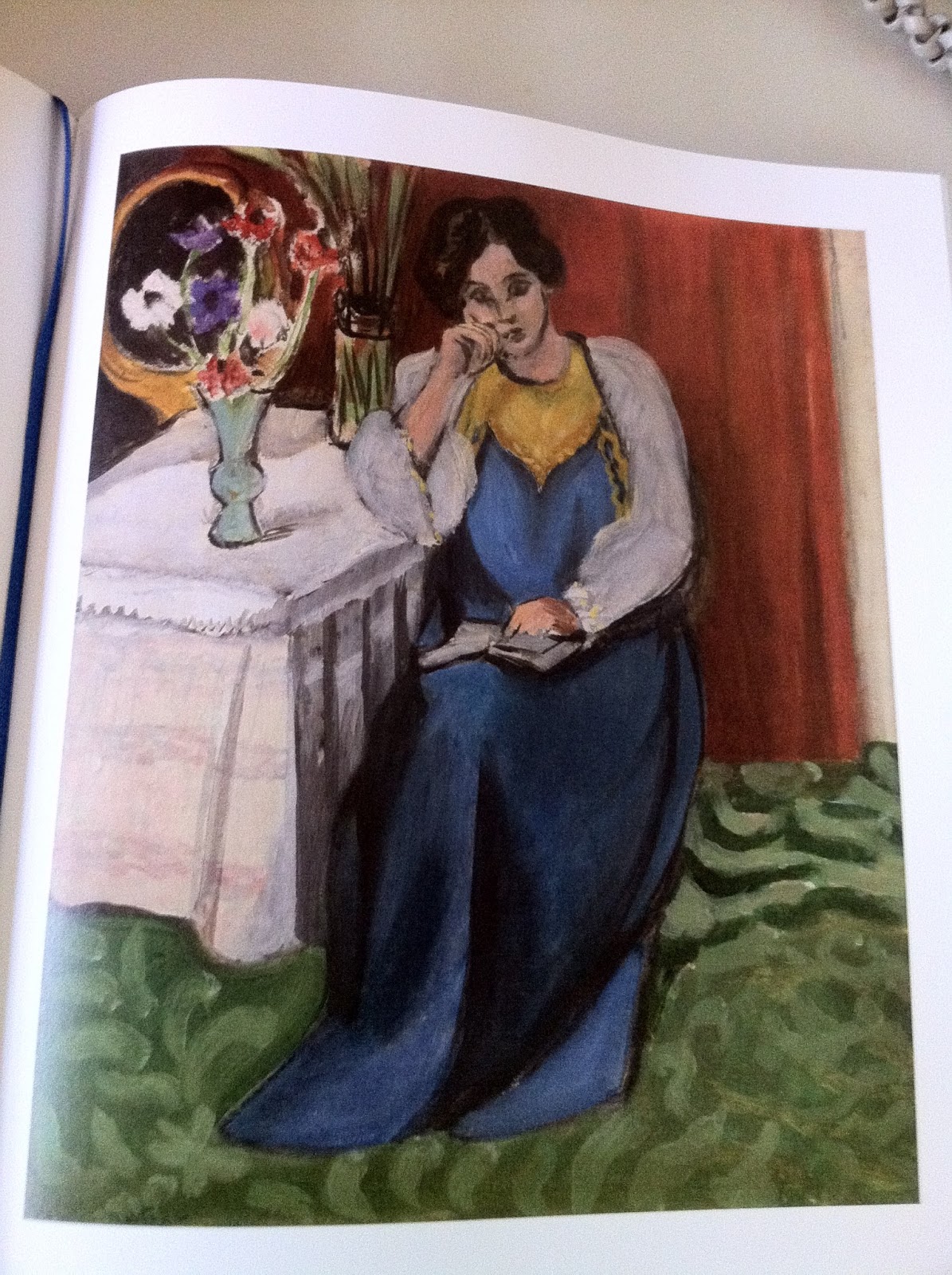
Matisse's Reading Woman in White and Yellow, 1919 was painted in the South of France in the suburb of Cimiez. The 31 x 33 cm work is "oil on canvas mounted on board" and "signed lower left Henri Matisse". Comment: Certificate of authenticity by Wanda de Guébriant, 12 Mar. 1996. Provenance: Galerie Bernheim-Jeune, Paris, acquired from the artists on 23 June 1919, no. 21624; Bernheim-Jeune Frères, acquired on 20 May 1931; collection Josse and Gaston Bernheim-Jeune, 1931; Bignou Gallery, New York; private collection, New York, 1947; collection Dr. Peter Nathan, Zurich, 1953; collection Emil G. Bührle, Zurich, acquired from the above on 8 December 1953; Foundation Emil G. Bührle Collection, since 1960; Triton Foundation, 1999.

Jacob Meyer De Haan, Self-Portrait

Jacob Meyer De Haan (Amsterdam 1852 - Amsterdam 1895), Self-Portrait against Japonist Background, circa 1889-1891, oil on canvas, 32.4 x 24.5 cm. Provenance: Collection Marie Henry, Le Pouldu; collection Ida Cochennec, daughter of the artists and Marie Henry; auction Cochennec Collection, Hôtel Drouot, Paris, 24 June 1959, no. 77; Marlborough Fine Art Ltd, London; collection Mr. and Mrs Arthur G. Altschul, New York, acquired in July 1961; Triton Foundation, 2002 (on long-term loan to the Van Gogh Museum, Amsterdam, 2002-2004).

Sideways view of Monet's Waterloo Bridge
Claude Monet: Waterloo Bridge, London (1901), pastel on brown laid paper, signed lower right Claude Monet, 30.5 x 48.0 cm. Provenance: Collection Werner Herold, Switzerland, circa 1917; private collection, USA, 1970; Triton Foundation, 1998.

Another sideway's view: Monet's
Charing Cross Bridge, London
Claude Monet's Charing Cross Bridge, London, 1901, pastel on brown gray laid paper, annotated and signed lower right à J. Massé/au jeune chasseur/d'Afrique Claude Monet, 31.0 x 48.5 cm. Provenance: Collection J. Massè, gift from the artist; auction Hôtel des Ventes, Enghien-Les-Bains, 24 Nov. 1985, no. 39; auction Hôtel des Ventes, Enghien-Les-Bains, 18 Mar. 1989, no. 6; private collection, Triton Foundation, 1998.

Picasso's Head of a Harlequin
Painted the year before the artist's death, Picasso's Head of a Harlequin (1971) is in "pen and brush in black ink, colored pencil and pastel on thick brown wove paper" (38 x 29 cm) and is "signed and dated in the lower right Picasso/12.1./71. Provenance: Galerie Louise Leiris, Paris; private collection, Europe; Michelle Rosenfeld Gallery, New York; private collection, USA; Finartis Kunsthandels AG, Zug; private collection, USA, 2004; Triton Foundation, 2009.
Lucian Freud, Woman with Eyes Closed
by Catherine Sezgin, ARCA Blog Editor

The seven paintings stolen from the Kunsthal Rotterdam on October 16 remain missing. On January 21, Romanian police arrested three men in connection with the gallery heist. March 4, Dutch police arrested a Romanian woman believed to be an accomplice. On March 13, a German man who arrested for blackmail after an alleged attempt to sell the Triton stolen paintings back to the foundation. The mother of one of the defendants arrested for the theft has claimed that she destroyed two of the paintings.

Last December Yale University published Avant-Gardes 1870 to the Present: The Collection of the Triton Foundation which offers more information on the stolen paintings stolen from the Triton Foundation. This catalogue is written by Sjraar van Heugten, former head of collections at the Van Gogh Museum, Amsterdam, and an independent art historian. Here the catalogue's information on the stolen paintings:

Lucian Freud: Woman with Eyes Closed (2002), oil on canvas, 30.5 x 25.4 cm. Provenance: Triton Foundation, acquired from the artists, 2002.


Paul Gauguin, La Fiancée 
Paul Gauguin, Woman Before a Window, 'The Fiancée, 1888, an oil on canvas. annotated in the lower right in red paint (damaged) La Fiancée; signed and dated lower right beneath annotation in black paint P Go 88, 33.8 x 41 cm. Provenance: Private collection, England; Kunsthandel (art dealer) Franz Buffa, Amsterdam; collection Allan and Nancy Miller, Solebury, Pennsylvania, 1949; auction Galerie Charpentier, Paris, 17 June 1960, no. 87 (unsold); auction Sotheby's, London, 4 July 1962, no. 75 (unsold); auction Christie's, Tokyo, 27 May 1969, no. 302; collection Samuel Josefowitz, Lausanne, circa 1981; auction Drouot-Montaigne, Paris, 3 April 1990, no. 58; Triton Foundation, 1997.


Matisse's Reading Woman
Matisse's Reading Woman in White and Yellow, 1919 was painted in the South of France in the suburb of Cimiez. The 31 x 33 cm work is "oil on canvas mounted on board" and "signed lower left Henri Matisse". Comment: Certificate of authenticity by Wanda de Guébriant, 12 Mar. 1996. Provenance: Galerie Bernheim-Jeune, Paris, acquired from the artists on 23 June 1919, no. 21624; Bernheim-Jeune Frères, acquired on 20 May 1931; collection Josse and Gaston Bernheim-Jeune, 1931; Bignou Gallery, New York; private collection, New York, 1947; collection Dr. Peter Nathan, Zurich, 1953; collection Emil G. Bührle, Zurich, acquired from the above on 8 December 1953; Foundation Emil G. Bührle Collection, since 1960; Triton Foundation, 1999.

Jacob Meyer De Haan, Self-Portrait

Jacob Meyer De Haan (Amsterdam 1852 - Amsterdam 1895), Self-Portrait against Japonist Background, circa 1889-1891, oil on canvas, 32.4 x 24.5 cm. Provenance: Collection Marie Henry, Le Pouldu; collection Ida Cochennec, daughter of the artists and Marie Henry; auction Cochennec Collection, Hôtel Drouot, Paris, 24 June 1959, no. 77; Marlborough Fine Art Ltd, London; collection Mr. and Mrs Arthur G. Altschul, New York, acquired in July 1961; Triton Foundation, 2002 (on long-term loan to the Van Gogh Museum, Amsterdam, 2002-2004).

Sideways view of Monet's Waterloo Bridge
Claude Monet: Waterloo Bridge, London (1901), pastel on brown laid paper, signed lower right Claude Monet, 30.5 x 48.0 cm. Provenance: Collection Werner Herold, Switzerland, circa 1917; private collection, USA, 1970; Triton Foundation, 1998.

Another sideway's view: Monet's
Charing Cross Bridge, London
Claude Monet's Charing Cross Bridge, London, 1901, pastel on brown gray laid paper, annotated and signed lower right à J. Massé/au jeune chasseur/d'Afrique Claude Monet, 31.0 x 48.5 cm. Provenance: Collection J. Massè, gift from the artist; auction Hôtel des Ventes, Enghien-Les-Bains, 24 Nov. 1985, no. 39; auction Hôtel des Ventes, Enghien-Les-Bains, 18 Mar. 1989, no. 6; private collection, Triton Foundation, 1998.

Picasso's Head of a Harlequin
Painted the year before the artist's death, Picasso's Head of a Harlequin (1971) is in "pen and brush in black ink, colored pencil and pastel on thick brown wove paper" (38 x 29 cm) and is "signed and dated in the lower right Picasso/12.1./71. Provenance: Galerie Louise Leiris, Paris; private collection, Europe; Michelle Rosenfeld Gallery, New York; private collection, USA; Finartis Kunsthandels AG, Zug; private collection, USA, 2004; Triton Foundation, 2009.
reade more... Résuméabuiyad

Dutch Police Arrest 19-year-old Romanian woman in connection with the Rotterdam Kunsthal Art Heist

Matisse painting stolen from Kunsthal Rotterdam
Monday March 4 Dutch police arrested a 19-year-old Romanian woman, the girlfriend of one of the suspected thieves responsible for robbing the Rotterdam's Kunsthal on October 16. 

In January, Romanian police arrested three men in Bucharest suspected of stealing seven paintings attributed to brand name artists such as Picasso, Matisse, Lucian Freud, and Paul Gauguin.

According to Reuter's Thomas Escritt reporting from Amsterdam yesterday, Dutch police's review of the art gallery's surveillance tapes of led authorities to two Romanian men, age 25 and 28, based upon 'their behavior and the frequency of their visits'. Escritt wrote:
Police believe the unnamed woman, the girlfriend of the 28-year-old, was living in the flat where the canvases were stored until they had been removed from their frames and transported to Romania.
Matisse painting stolen from Kunsthal Rotterdam
Monday March 4 Dutch police arrested a 19-year-old Romanian woman, the girlfriend of one of the suspected thieves responsible for robbing the Rotterdam's Kunsthal on October 16. 

In January, Romanian police arrested three men in Bucharest suspected of stealing seven paintings attributed to brand name artists such as Picasso, Matisse, Lucian Freud, and Paul Gauguin.

According to Reuter's Thomas Escritt reporting from Amsterdam yesterday, Dutch police's review of the art gallery's surveillance tapes of led authorities to two Romanian men, age 25 and 28, based upon 'their behavior and the frequency of their visits'. Escritt wrote:
Police believe the unnamed woman, the girlfriend of the 28-year-old, was living in the flat where the canvases were stored until they had been removed from their frames and transported to Romania.
reade more... Résuméabuiyad

Kunsthal Rotterdam Art Theft: Journalist Colin Gleadell on "overvaluation" of the seven stolen paintings

by Catherine Sezgin, ARCA Blog

So much has been written about the October 16 theft of seven paintings from the Triton Foundation on display at the Kunsthal Rotterdam that it takes a long time to sift through so much of the published material to find original information on the internet.  However, Colin Gleadell writing for Britain's Telegraph grabbed my attention with the headline "Stone Dutch works wildly overvalued".

Last week ARCA's CEO Lynda Albertson wrote about the Triton Foundation here on this blog, finding that the collection assembled in the last two decades had been infrequently exhibited, had no website and had its first big show of 150 of the works this month at the Kunsthal Rotterdam ("Avant-Gardes").

This December, Yale University Press is publishing "Avant-Gardes, 1870-1970, The Triton Collection" ($125, cloth) , a 568-page book by Sjraar van Heugten, an independent art historian and a former Head of Collections at the Van Gogh Museum in Amsterdam (about 60 kilometers north of Rotterdam).  The Triton Foundation's collection contains approximately 250 paintings, drawings, and sculptures from more than 170 Western artists dating from 1870 to 1970  including George Braques, Paul Cézanne, Edgar Degas, Willem de Kooning, Lucien Freud, Roy Lichtenstein, Édouard Manet, Henri Matisse, Claude Monet, Pablo Picasso, Vincent van Gogh and Andy Warhol ("Avante-Gardes").

The statement attributed to the director of the Kunsthal Rotterdam Emily Ansenk posted on the art gallery's website identifies the stolen paintings adding that the investigation will be handled by the police.  As to the seven stolen paintings, Ansenk states: "Perhaps we should add that all stolen works have been internationally registered and described and are therefore unsaleable.  We are not prepared to comment on the value of the works."

Historically, published accounts of art thefts have attached a value to the paintings which thieves have used as a basis for a ransom demand.

However, Gleadell, who has written extensively on the art market, assesses the value of the seven stolen paintings between "£12.5 million and £16 million" based on experts familiar with the collection who wished to remain anonymous:  
Some pictures that were thought to be oil paintings were in fact much less valuable pastels or drawings on paper, and none of the stolen pictures measured more than 13in by 16in – handy enough for the thieves to tuck under their arms. Monet’s oil paintings of the Thames, made when he stayed at the Savoy Hotel in 1901, have fetched as much as £18 million at auction. But the two stolen Monets were small pastels the likes of which have never sold for more than £250,000 at auction.
The Picasso, a late work, was also a small coloured drawing on paper, not an oil painting.
Picasso’s large, late oil paintings have made £10 million at auction, hence a guesstimate by Forbes of £9.7 million. But late drawings of this size have never sold for over a million pounds, though the quality of this one may lift it to seven figures.
The International Herald Tribune came up with a punchy $130 million figure for the Picasso and Matisse alone, and while the Matisse was indeed an oil painting – larger, more sumptuous interiors of seated or reclining women have made £10 million or more – the small scale of this work and less seductive pose of the sitter led our experts to place a value of between £3 million and £4 million on it. 
Similarly, the Gauguin is an early painting from 1888, so is of historical interest, but would not command anything like the sums generated by his sought-after Tahitian pictures. Our experts granted it a £3 million to £4 million estimate. 
The self-portrait by the lesser-known Dutch painter Jacob Meyer de Haan is more difficult because so few of his works have been sold at auction and none for more than £600,000. A friend of Gauguin’s, he painted this when the two were in Brittany in the late 1880s. And while it is stylistically related to the Frenchman’s work of the time, it is a small masterpiece by de Haan; thus a figure of £2 million has been suggested. 
The only contemporary work to be stolen was a portrait of the young journalist Emily Bearn by Lucian Freud, painted in 2002. Although Freud’s late work tends to be less sought after, this is a remarkably tender portrait and has been included in several museum exhibitions. Our experts estimate that it should be worth about £3 million. 

by Catherine Sezgin, ARCA Blog

So much has been written about the October 16 theft of seven paintings from the Triton Foundation on display at the Kunsthal Rotterdam that it takes a long time to sift through so much of the published material to find original information on the internet.  However, Colin Gleadell writing for Britain's Telegraph grabbed my attention with the headline "Stone Dutch works wildly overvalued".

Last week ARCA's CEO Lynda Albertson wrote about the Triton Foundation here on this blog, finding that the collection assembled in the last two decades had been infrequently exhibited, had no website and had its first big show of 150 of the works this month at the Kunsthal Rotterdam ("Avant-Gardes").

This December, Yale University Press is publishing "Avant-Gardes, 1870-1970, The Triton Collection" ($125, cloth) , a 568-page book by Sjraar van Heugten, an independent art historian and a former Head of Collections at the Van Gogh Museum in Amsterdam (about 60 kilometers north of Rotterdam).  The Triton Foundation's collection contains approximately 250 paintings, drawings, and sculptures from more than 170 Western artists dating from 1870 to 1970  including George Braques, Paul Cézanne, Edgar Degas, Willem de Kooning, Lucien Freud, Roy Lichtenstein, Édouard Manet, Henri Matisse, Claude Monet, Pablo Picasso, Vincent van Gogh and Andy Warhol ("Avante-Gardes").

The statement attributed to the director of the Kunsthal Rotterdam Emily Ansenk posted on the art gallery's website identifies the stolen paintings adding that the investigation will be handled by the police.  As to the seven stolen paintings, Ansenk states: "Perhaps we should add that all stolen works have been internationally registered and described and are therefore unsaleable.  We are not prepared to comment on the value of the works."

Historically, published accounts of art thefts have attached a value to the paintings which thieves have used as a basis for a ransom demand.

However, Gleadell, who has written extensively on the art market, assesses the value of the seven stolen paintings between "£12.5 million and £16 million" based on experts familiar with the collection who wished to remain anonymous:  
Some pictures that were thought to be oil paintings were in fact much less valuable pastels or drawings on paper, and none of the stolen pictures measured more than 13in by 16in – handy enough for the thieves to tuck under their arms. Monet’s oil paintings of the Thames, made when he stayed at the Savoy Hotel in 1901, have fetched as much as £18 million at auction. But the two stolen Monets were small pastels the likes of which have never sold for more than £250,000 at auction.
The Picasso, a late work, was also a small coloured drawing on paper, not an oil painting.
Picasso’s large, late oil paintings have made £10 million at auction, hence a guesstimate by Forbes of £9.7 million. But late drawings of this size have never sold for over a million pounds, though the quality of this one may lift it to seven figures.
The International Herald Tribune came up with a punchy $130 million figure for the Picasso and Matisse alone, and while the Matisse was indeed an oil painting – larger, more sumptuous interiors of seated or reclining women have made £10 million or more – the small scale of this work and less seductive pose of the sitter led our experts to place a value of between £3 million and £4 million on it. 
Similarly, the Gauguin is an early painting from 1888, so is of historical interest, but would not command anything like the sums generated by his sought-after Tahitian pictures. Our experts granted it a £3 million to £4 million estimate. 
The self-portrait by the lesser-known Dutch painter Jacob Meyer de Haan is more difficult because so few of his works have been sold at auction and none for more than £600,000. A friend of Gauguin’s, he painted this when the two were in Brittany in the late 1880s. And while it is stylistically related to the Frenchman’s work of the time, it is a small masterpiece by de Haan; thus a figure of £2 million has been suggested. 
The only contemporary work to be stolen was a portrait of the young journalist Emily Bearn by Lucian Freud, painted in 2002. Although Freud’s late work tends to be less sought after, this is a remarkably tender portrait and has been included in several museum exhibitions. Our experts estimate that it should be worth about £3 million. 

reade more... Résuméabuiyad

Kunsthal Rotterdam Art Heist: "Progress in Kunsthal art theft investigation" announced by Rotterdam-Rijnmond Police

Rotterdam-Rijnmond Police in The Netherlands released a press release on their website regarding progress in the investigation of the October 16 burglary at the Kunsthal (Dutch for art gallery) Rotterdam in English, reflecting the international attentional received by the theft of seven stolen paintings by artists such as Picasso, Matisse, and Monet.

Here's a link to the press release titled "Progress in Kunsthal art theft investigation" provided by the Dutch police.  We've copied and pasted the text here for your convenience (the likely date is October 17th):
Investigation following the art theft at the Kunsthal gallery in Rotterdam has shown that the suspects entered through a door at the back of the building. They seized and made off with the paintings in a very short space of time. The collection and examination of camera footage is now in full swing, as is the rest of the criminal investigation. So far no images have been found which are suitable for publication.
Burglars stole seven art works from the Kunsthal at Westzeedijk in the course of the night between Monday and Tuesday. They forced their way into the building at about quarter past three in the morning and were outside again very soon after.
The alarm went off at the security company, whereupon police and security personnel launched an investigation. There were no visible signs of forced entry outside the premises. Nor was anyone present inside the building.
Security personnel only discovered the paintings were gone after they went inside the building.
Forensic detectives made a thorough investigation, carefully securing any clues and evidence both inside the Kunsthal and in the immediate vicinity. They were able to establish how the perpetrators gained access to the building without leaving any sign of forced entry.
The Kunsthal contacted the owner of the works in question. On Tuesday morning the Kunsthal submitted an official report to the police as soon as it was ascertained for certain which paintings were involved. The publication of images attracted world-wide attention to the robbery and the stolen paintings. An international alert was also issued for the pictures.
Apart from images from inside the Kunsthal itself, camera images of the immediate vicinity were also secured. All images are being studied carefully by the detectives. So far no camera images suitable for publication have been found.
The Dutch television programme 'Opsporing Verzocht' also drew attention to the case on Tuesday evening. Images of the stolen paintings were shown during the programme.
Thanks to all the media attention, dozens of tips were received and are being investigated for their usability.
The team spoke to various witnesses. All information is still welcome. The investigators are making a particular appeal to the visitors to the Kunsthal. Did you visit the Kunsthal last week and did you see or hear anything unusual while you were there? Did you take any photos or video pictures? If so you should contact the police on 0900-8844. If you would prefer to speak to the Criminal Information Unit call 079-3458999. We would also like to speak to you if you saw any suspicious vehicles or persons in the vicinity of the Kunsthal in the period immediately leading up to the art theft.
Rotterdam-Rijnmond Police in The Netherlands released a press release on their website regarding progress in the investigation of the October 16 burglary at the Kunsthal (Dutch for art gallery) Rotterdam in English, reflecting the international attentional received by the theft of seven stolen paintings by artists such as Picasso, Matisse, and Monet.

Here's a link to the press release titled "Progress in Kunsthal art theft investigation" provided by the Dutch police.  We've copied and pasted the text here for your convenience (the likely date is October 17th):
Investigation following the art theft at the Kunsthal gallery in Rotterdam has shown that the suspects entered through a door at the back of the building. They seized and made off with the paintings in a very short space of time. The collection and examination of camera footage is now in full swing, as is the rest of the criminal investigation. So far no images have been found which are suitable for publication.
Burglars stole seven art works from the Kunsthal at Westzeedijk in the course of the night between Monday and Tuesday. They forced their way into the building at about quarter past three in the morning and were outside again very soon after.
The alarm went off at the security company, whereupon police and security personnel launched an investigation. There were no visible signs of forced entry outside the premises. Nor was anyone present inside the building.
Security personnel only discovered the paintings were gone after they went inside the building.
Forensic detectives made a thorough investigation, carefully securing any clues and evidence both inside the Kunsthal and in the immediate vicinity. They were able to establish how the perpetrators gained access to the building without leaving any sign of forced entry.
The Kunsthal contacted the owner of the works in question. On Tuesday morning the Kunsthal submitted an official report to the police as soon as it was ascertained for certain which paintings were involved. The publication of images attracted world-wide attention to the robbery and the stolen paintings. An international alert was also issued for the pictures.
Apart from images from inside the Kunsthal itself, camera images of the immediate vicinity were also secured. All images are being studied carefully by the detectives. So far no camera images suitable for publication have been found.
The Dutch television programme 'Opsporing Verzocht' also drew attention to the case on Tuesday evening. Images of the stolen paintings were shown during the programme.
Thanks to all the media attention, dozens of tips were received and are being investigated for their usability.
The team spoke to various witnesses. All information is still welcome. The investigators are making a particular appeal to the visitors to the Kunsthal. Did you visit the Kunsthal last week and did you see or hear anything unusual while you were there? Did you take any photos or video pictures? If so you should contact the police on 0900-8844. If you would prefer to speak to the Criminal Information Unit call 079-3458999. We would also like to speak to you if you saw any suspicious vehicles or persons in the vicinity of the Kunsthal in the period immediately leading up to the art theft.
reade more... Résuméabuiyad

Rotterdam Art Heist: What is the Triton Foundation?

Book cover for a volume Yale Press
 is publishing this December
by Lynda Albertson, ARCA CEO

The Triton Collection was built over twenty years by Rotterdam oil and shipping magnate Willem Cordia and his wife Marijke van der Laan.  The collection includes approximately 250 paintings, drawings and pieces of sculpture.  The core of the collection consists of Western art dating from 1870 to 1970 and is reputed to be one of the 200 most important private collections in the world.

An entrepreneur and investor, Willem Cordia served as an officer with the Holland-America Line and later became a strategic investment developer and port magnate in Rotterdam.  His wife’s family was well known in the Dutch shipping world, making their fortune in the worldwide transport of dry bulk cargo like ore, coal and grain.  At the time of his death, Cordia's wealth was estimated at  € 330 million.

The Triton Collection was bequeathed to the Dutch Foundation Triton at the time of Cordia’s death.  Starting with the goal of making the collection and new acquisitions more accessible to the general public, the foundation’s overseers have loaned works from the collection to museums and temporary exhibitions.  Artworks from the collection have been loaned to international art museums such as the Thyssen-Bornemisza Museum in Madrid, the Seoul Museum of Art and locally within the Netherlands to the Van Gogh Museum as well as the Hague Municipal Museum.

The Triton Collection focuses on innovators in modern art and includes artworks by Bonnard, Braque, Cézanne, De Kooning, Dufy, Fontana, Freud, Giacometti, Kelly, Klein, Manzoni, Modigliani, Mondrian, Monet, Picabia, Picasso, Stella, Uecker, Van Dongen, Van Gogh, and Vuillard.

From 2006 to 2011, Peter van Beveren served as curator of the Triton Foundation.  The Collection is now curated by Marlies Cordia-Roeloffs, daughter of Willem Cordia and his wife Marijke van der Laan.  The exhibit on loan to the Kunsthal Rotterdam from 7 October 2012 to 20 January 2013 included more than 150 artworks selected from over 100 different artists from the vanguard, the avant-garde of western art history.  Many of the works were on display for the first time publicly.

Between the evening of the 15th and the morning of the 16th of October 2012, the following seven paintings were stolen from the exhibition:

•           Pablo Picasso : Tête d'Arlequin (1971)
•           Henri Matisse : La Liseuse and Blanc et Jaune (1919)
•           Claude Monet : Waterloo Bridge, London (1901)
•           Claude Monet: Charing Cross Bridge, London (1901)
•           Paul Gauguin : Femme devant une fenêtre ouverte, dite la Fiancée (1888)
•           Meijer de Haan : Autoportrait (circa 1889-1891)
•           Lucian Freud : Woman with Eyes Closed (2002)

Book cover for a volume Yale Press
 is publishing this December
by Lynda Albertson, ARCA CEO

The Triton Collection was built over twenty years by Rotterdam oil and shipping magnate Willem Cordia and his wife Marijke van der Laan.  The collection includes approximately 250 paintings, drawings and pieces of sculpture.  The core of the collection consists of Western art dating from 1870 to 1970 and is reputed to be one of the 200 most important private collections in the world.

An entrepreneur and investor, Willem Cordia served as an officer with the Holland-America Line and later became a strategic investment developer and port magnate in Rotterdam.  His wife’s family was well known in the Dutch shipping world, making their fortune in the worldwide transport of dry bulk cargo like ore, coal and grain.  At the time of his death, Cordia's wealth was estimated at  € 330 million.

The Triton Collection was bequeathed to the Dutch Foundation Triton at the time of Cordia’s death.  Starting with the goal of making the collection and new acquisitions more accessible to the general public, the foundation’s overseers have loaned works from the collection to museums and temporary exhibitions.  Artworks from the collection have been loaned to international art museums such as the Thyssen-Bornemisza Museum in Madrid, the Seoul Museum of Art and locally within the Netherlands to the Van Gogh Museum as well as the Hague Municipal Museum.

The Triton Collection focuses on innovators in modern art and includes artworks by Bonnard, Braque, Cézanne, De Kooning, Dufy, Fontana, Freud, Giacometti, Kelly, Klein, Manzoni, Modigliani, Mondrian, Monet, Picabia, Picasso, Stella, Uecker, Van Dongen, Van Gogh, and Vuillard.

From 2006 to 2011, Peter van Beveren served as curator of the Triton Foundation.  The Collection is now curated by Marlies Cordia-Roeloffs, daughter of Willem Cordia and his wife Marijke van der Laan.  The exhibit on loan to the Kunsthal Rotterdam from 7 October 2012 to 20 January 2013 included more than 150 artworks selected from over 100 different artists from the vanguard, the avant-garde of western art history.  Many of the works were on display for the first time publicly.

Between the evening of the 15th and the morning of the 16th of October 2012, the following seven paintings were stolen from the exhibition:

•           Pablo Picasso : Tête d'Arlequin (1971)
•           Henri Matisse : La Liseuse and Blanc et Jaune (1919)
•           Claude Monet : Waterloo Bridge, London (1901)
•           Claude Monet: Charing Cross Bridge, London (1901)
•           Paul Gauguin : Femme devant une fenêtre ouverte, dite la Fiancée (1888)
•           Meijer de Haan : Autoportrait (circa 1889-1891)
•           Lucian Freud : Woman with Eyes Closed (2002)

reade more... Résuméabuiyad

Rotterdam Art Heist: The Day After

by Catherine Sezgin, ARCA Blog Editor-in-Chief

Questions remain the day after seven stolen paintings estimated to be worth "tens of millions" remain missing from the Kunsthal art gallery when yesterday morning the 20-year-old building's "state of the art" security system alerted private security, then the Rotterdam police, that the contemporary art space had been robbed.  A Picasso, two Monets, a Gauguin, a Matissee -- five of the paintings were attributed to artists favored by thieves for their fame and perceived value -- plus another by Lucien Freud (famous contemporary artist) and Meijer de Haan (1852-1895), whose name may not be as recognizable but the Dutch artist's paintings are in the Musée d'Orsay in Paris and the Norton Simon Museum in Pasadena (Meyer de Haan painted with Gauguin in Brittany).

Here are links to CBS News (video and text) on the heist and speculation as to whether or not it was an inside job because, as discussed by Chris Marinello of The Art Loss Register, the theft "just went too smoothly".   In the later segment, CBS News correspondent John Miller, a former FBI deputy director, describes art thieves not as sophisticated urbanites (see Pierce Brosnan in The Thomas Crown Affair) but "knuckleheads" who put a lot of time into taking the paintings but will either seek assistance in selling the paintings that usually involves undercover agents, or will try to ransom the paintings back to the insurance company, or will keep the paintings for years as a 'get out of jail card'.

The question after an art heist is more overwhelmingly not who took the paintings but when or if they will ever be recovered.  Listing the stolen paintings into the database of The Art Loss Register, with the media, and other law enforcement agencies is meant to stop the sale of the works through legitimate art dealers and auction houses.

In Kate Connolly's piece yesterday in The Guardian ("Rotterdam art thieves take valuable paintings in dawn heist"), "security experts speculated that the thieves might have taken advantage of Rotterdam's port -- one of the largest in the world -- to swiftly move the paintings abroad" and that the paintings could have been "stolen to order" or held for ransom.

According to the Associated Press (published online here with the Winnipeg Free Press), Dutch police are following up on "15 tips from the public", "studying video surveillance images", and have "focused their attention on a rear door that thieves most likely used to get into the gallery before snatching the paintings."

Here DutchNews.nl reports that the Kunsthal reopened Wednesday and replaced the spaces formerly occupied by the stolen paintings with works from the Triton Foundation (and notes that journalists outnumbered visitors inside the museum).
by Catherine Sezgin, ARCA Blog Editor-in-Chief

Questions remain the day after seven stolen paintings estimated to be worth "tens of millions" remain missing from the Kunsthal art gallery when yesterday morning the 20-year-old building's "state of the art" security system alerted private security, then the Rotterdam police, that the contemporary art space had been robbed.  A Picasso, two Monets, a Gauguin, a Matissee -- five of the paintings were attributed to artists favored by thieves for their fame and perceived value -- plus another by Lucien Freud (famous contemporary artist) and Meijer de Haan (1852-1895), whose name may not be as recognizable but the Dutch artist's paintings are in the Musée d'Orsay in Paris and the Norton Simon Museum in Pasadena (Meyer de Haan painted with Gauguin in Brittany).

Here are links to CBS News (video and text) on the heist and speculation as to whether or not it was an inside job because, as discussed by Chris Marinello of The Art Loss Register, the theft "just went too smoothly".   In the later segment, CBS News correspondent John Miller, a former FBI deputy director, describes art thieves not as sophisticated urbanites (see Pierce Brosnan in The Thomas Crown Affair) but "knuckleheads" who put a lot of time into taking the paintings but will either seek assistance in selling the paintings that usually involves undercover agents, or will try to ransom the paintings back to the insurance company, or will keep the paintings for years as a 'get out of jail card'.

The question after an art heist is more overwhelmingly not who took the paintings but when or if they will ever be recovered.  Listing the stolen paintings into the database of The Art Loss Register, with the media, and other law enforcement agencies is meant to stop the sale of the works through legitimate art dealers and auction houses.

In Kate Connolly's piece yesterday in The Guardian ("Rotterdam art thieves take valuable paintings in dawn heist"), "security experts speculated that the thieves might have taken advantage of Rotterdam's port -- one of the largest in the world -- to swiftly move the paintings abroad" and that the paintings could have been "stolen to order" or held for ransom.

According to the Associated Press (published online here with the Winnipeg Free Press), Dutch police are following up on "15 tips from the public", "studying video surveillance images", and have "focused their attention on a rear door that thieves most likely used to get into the gallery before snatching the paintings."

Here DutchNews.nl reports that the Kunsthal reopened Wednesday and replaced the spaces formerly occupied by the stolen paintings with works from the Triton Foundation (and notes that journalists outnumbered visitors inside the museum).
reade more... Résuméabuiyad

Experts opine professional thieves may have stolen seven paintings from Rottendam gallery for ransom or to be sold later on the black market for a fraction of their worth

Monet's "Charing Cross Bridge, London" 1901/AP
On October 7, Kunsthal Rotterdam, a showcase of temporary exhibitions, opened "Avante Garde" to celebrate the art gallery's 20 anniversary and to display for the first time in public 150 works collected by Willem and Marijke Cordia-Van der Laan.  Just nine days later, the Kunsthal's alarm system went off shortly after 3 a.m., alerting the exhibition hall's private security detail.  Security personnel arriving by car noticed that seven paintings were missing and informed the Dutch police who began their investigation -- sending in a forensics team to fingerprint the area and collect any physical evidence, interviewing potential witnesses in the area, and reviewing security camera footage.

Monet's "Waterloo Bridge, London" 1901/AP
Within hours, Dutch police and museum officials released the names of the stolen artwork: Pablo Picasso's "Tete d'Arlequin"/"Harlequin Head" (1971); Claude Monet's "Waterloo Bridge, London" (1901) and "Charing Cross Bridge, London" (1901); Henri Matisse's 'La Liseuse en Blanc et Jaune'/"Reading Girl in White and Yellow" (1919); Paul Gauguin's 'Femme devant une fenêtre ouverte, dite la Fiancée'/"Girl in Front of Open Window"/(1898); Meyer de Haan's 'Autoportrait'/"Self-Portrait"/ (circa 1890); and Lucian Freud's "Woman with Eyes Closed" (2002). (The images of the paintings here were provided by the Rottendam police to the Associated Press and made available through Spiegel Online).

Gauguin's "Girl in Front of Open Window" 1898
According to security consultant Ton Cremers, the high visibility of the art through the art gallery windows was more of a vulnerability than the lack of night time security guards who could have been taken hostage.  Noah Charney, founder of ARCA, writes that the paintings were likely stolen for ransom.  Chris Marinello of the Art Loss Registry also speculates that the paintings would be ransomed or sold for a fraction of their worth.  Retired Scotland Yard art detective and private investigator Charley Hill believes that the thieves were professionals.

The Kunsthal gallery, normally closed on Mondays, remained closed on Tuesday for the police investigation but planned to reopen on Wednesday.

Picasso's "Harlequin Head" 1971
Spiegel Online offers a photo gallery of the crime scene and the stolen artworks.

Matisse's 1919 "Reading Girl in White and Yellow"
Meyer de Haan's "Self-Portrait" c. 1890


Monet's "Charing Cross Bridge, London" 1901/AP
On October 7, Kunsthal Rotterdam, a showcase of temporary exhibitions, opened "Avante Garde" to celebrate the art gallery's 20 anniversary and to display for the first time in public 150 works collected by Willem and Marijke Cordia-Van der Laan.  Just nine days later, the Kunsthal's alarm system went off shortly after 3 a.m., alerting the exhibition hall's private security detail.  Security personnel arriving by car noticed that seven paintings were missing and informed the Dutch police who began their investigation -- sending in a forensics team to fingerprint the area and collect any physical evidence, interviewing potential witnesses in the area, and reviewing security camera footage.

Monet's "Waterloo Bridge, London" 1901/AP
Within hours, Dutch police and museum officials released the names of the stolen artwork: Pablo Picasso's "Tete d'Arlequin"/"Harlequin Head" (1971); Claude Monet's "Waterloo Bridge, London" (1901) and "Charing Cross Bridge, London" (1901); Henri Matisse's 'La Liseuse en Blanc et Jaune'/"Reading Girl in White and Yellow" (1919); Paul Gauguin's 'Femme devant une fenêtre ouverte, dite la Fiancée'/"Girl in Front of Open Window"/(1898); Meyer de Haan's 'Autoportrait'/"Self-Portrait"/ (circa 1890); and Lucian Freud's "Woman with Eyes Closed" (2002). (The images of the paintings here were provided by the Rottendam police to the Associated Press and made available through Spiegel Online).

Gauguin's "Girl in Front of Open Window" 1898
According to security consultant Ton Cremers, the high visibility of the art through the art gallery windows was more of a vulnerability than the lack of night time security guards who could have been taken hostage.  Noah Charney, founder of ARCA, writes that the paintings were likely stolen for ransom.  Chris Marinello of the Art Loss Registry also speculates that the paintings would be ransomed or sold for a fraction of their worth.  Retired Scotland Yard art detective and private investigator Charley Hill believes that the thieves were professionals.

The Kunsthal gallery, normally closed on Mondays, remained closed on Tuesday for the police investigation but planned to reopen on Wednesday.

Picasso's "Harlequin Head" 1971
Spiegel Online offers a photo gallery of the crime scene and the stolen artworks.

Matisse's 1919 "Reading Girl in White and Yellow"
Meyer de Haan's "Self-Portrait" c. 1890


reade more... Résuméabuiyad